
Science & Tech
Ghana’s Data Boom: How Mobile Internet is Powering the Digital Future in 2025


As of 2025, mobile data consumption in Ghana reflects significant growth, driven by increased internet penetration, the expansion of broadband networks, and evolving user behaviors.
Mobile Data Usage and Connectivity
Mobile Connections: Ghana recorded approximately 38.3 million mobile connections at the start of 2025, equating to 110% of the total population. This high percentage indicates that many individuals use multiple SIM cards or devices.
READ ALSO: Social Media in Ghana 2025: Key Trends, User Insights, and Platform Popularity
Broadband Access: 93.4% of these connections fall under broadband categories (3G, 4G, and 5G), signaling rapid digital adoption across the country.
Internet Penetration and Usage
Internet Users: As of January 2025, there were 24.3 million internet users in Ghana—69.9% of the population. This reflects a 1.9% growth (an increase of 446,000 users) compared to 2024.
Projected Growth: Some forecasts estimate internet penetration could reach 98% by the end of 2025.
READ ALSO: Inside Ghana’s Smartphone Market 2025: Who’s Winning and Why?
Mobile Data Consumption Trends
Global Context: On average, global smartphone users are expected to consume 23 GB of data per month in 2025, up from 15 GB in 2022. This rise is due to high-definition media, social media usage, and increased cloud service activity.
Ghana’s Position: While specific figures for Ghana aren’t publicly stated, growing broadband access and user numbers suggest a similar upward trend in monthly data usage.
Mobile Data Pricing and Affordability
Cost of Data: The average price of 1GB of mobile data in Ghana is around GHS17 (≈$1.37)—nearly equal to the daily minimum wage of GHS19.97 ($1.61). This highlights an ongoing affordability concern.
Market Dynamics: Compared to other African nations, Ghana’s mobile data rates are competitive, yet still present a challenge for consistent access among low-income users.
Infrastructure Developments and Future Outlook
Network Expansion: Telecom companies like MTN Ghana and Telecel Ghana continue to invest in infrastructure. Telecel, for example, installed 300 new 4G sites in early 2024 to expand coverage.
Revenue Projections: Ghana’s mobile data service revenue is expected to grow at a 6% CAGR from 2024 to 2029, largely due to the uptake of high-speed services and broader data consumption.
Conclusion
Ghana’s mobile data landscape in 2025 is one of growth and transition.
With more people connected than ever before, expanding broadband networks, and rising data demand, the country is well on its way toward becoming a digitally inclusive society.
However, ensuring affordability remains a key challenge that must be addressed to make this digital future accessible to all.



Science & Tech
The Real Story Behind VLC Media Player: From Student Project to the World’s Most Beloved Cone

You know that familiar orange traffic cone icon? The one that pops up when you desperately need to play some weird video file at midnight, and it just… works? That’s VLC – the media player that’s been quietly saving our bacon for over 25 years. It’s on billions of devices, plays pretty much anything you throw at it (even half-downloaded or scratched-up files), and best of all, it’s completely free, with no ads, no tracking, and no nonsense. But how did this little gem come to be? It’s a story of rebellious students, late-night partying, and one guy’s stubborn refusal to sell out.

It all started back in the late 1990s at École Centrale Paris, one of France’s top engineering schools. A bunch of students were annoyed that their campus network had tons of bandwidth but no good way to stream movies or music to watch together in the dorms. So, they decided to build their own solution – a streaming server and player called VideoLAN (because it was for the local area network, or LAN).
The project kicked off as a fun academic side hustle, but it was technically bending the rules by hogging network resources. The school mostly looked the other way – these were brilliant kids, after all.

Now, about that cone: The students in the networking club had a quirky tradition. They’d “collect” traffic cones from roadworks around campus (you know, after a few parties), and pile them up as decorations or beer-pong obstacles. One night, someone snapped a photo of a cone sitting on a monitor during a coding session, and boom – that became the logo. It’s been the same cheeky orange cone ever since, a perfect symbol of the project’s playful, DIY roots.
Fast forward to 2001: The first public version of the VLC player drops on February 1st. It was clunky, Windows-only, and looked like it was from the ’90s, but it already played almost every format because the students bundled in every open-source codec they could find.
Things almost fell apart a few times. The university tried to claim ownership and turn it commercial. The students’ response? Over a weekend, they relicensed everything under the GNU GPL (a super-strict open-source license), making it impossible for anyone to ever monetize it. Then they broke away and restarted as an independent volunteer project.
Around 2005–2007, when many original contributors graduated and moved on, the project was fading. That’s when Jean-Baptiste Kempf (often called JB) stepped up big time. He’d joined as a student a few years earlier and became the driving force – leading development, keeping it alive, and turning it into the powerhouse it is today.
JB has turned down massive offers – we’re talking tens of millions – to add ads or sell out. He even started a separate company (VideoLabs) to do paid consulting work around video tech, which helps fund things without touching VLC itself. The core player stays pure: run by a global community of volunteers, with the non-profit VideoLAN organization relying mostly on donations.
As of 2025, VLC has racked up over 6 billion downloads. It runs on everything from Windows and Mac to Android, iOS, Linux, and even obscure systems. No ads. No data collection. Just reliable playback, whether you’re watching anime with rare codecs, rescuing old family videos, or streaming something obscure.
Next time that little cone spins up and saves your corrupted file (or just plays your movie without fuss), think of those French students sneaking traffic cones, the weekend licensing rebellion, and JB saying “no” to the big money. VLC isn’t just software – it’s a reminder that some things on the internet can still be genuinely good, free, and built for people, not profit. And honestly? In today’s world, that’s pretty damn heartwarming.

On 9th July, 2025, Earth completed its shortest day since official records began, spinning approximately 1.3 milliseconds faster than the standard 24-hour rotation. While the change went unnoticed in our daily routines, it triggered global attention among scientists and timekeeping institutions that monitor the planet’s rotation with extreme precision.
Experts believe the Moon played a key role in this rare event. When the Moon is positioned farther from Earth’s equator, it can weaken tidal forces that normally act as a brake on Earth’s spin. Other factors such as movement within the Earth’s molten core, changes in ocean currents, and even shifting weather systems could also have contributed to the faster rotation.
Although the difference was just over a millisecond, such variations carry weight in the world of high-precision technology. Systems like GPS, satellite navigation, and financial trading rely on atomic clocks and exact synchronization with Earth’s rotation. A deviation this small can still affect calculations and require adjustments to maintain global accuracy.
This shortened day is not expected to be an isolated case. Scientists have identified similar anomalies expected later this summer, with projections showing that both 22nd July and 5th August may also be milliseconds shorter than usual. If this pattern continues over the next few years, 2029 could see the introduction of the first-ever negative leap second, where a second is subtracted from coordinated universal time.
While most of us will never feel the effect of a day shortened by fractions of a second, the science behind it is a powerful reminder of Earth’s dynamic nature. Our planet is constantly shifting, rotating, and responding to both internal and external forces, sometimes in ways that subtly but significantly reshape how we measure time itself.
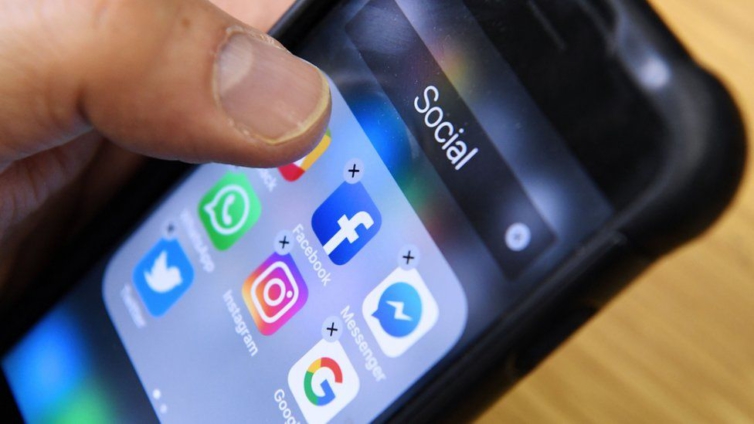
Social media and video networks have become the main source of news in the US, overtaking traditional TV channels and news websites, research suggests.
More than half (54%) of people get news from networks like Facebook, X and YouTube – overtaking TV (50%) and news sites and apps (48%), according to the Reuters Institute.
“The rise of social media and personality-based news is not unique to the United States, but changes seem to be happening faster – and with more impact – than in other countries,” a report found.
Podcaster Joe Rogan was the most widely seen personality, with almost a quarter (22%) of the population saying they had come across news or commentary from him in the previous week.
The report’s author, Nic Newman, said the rise of social video and personality-driven news “represents another significant challenge for traditional publishers”.
The institute also highlighted a trend for some politicians to give their time to sympathetic online hosts rather than mainstream interviewers.
It said populist politicians around the world are “increasingly able to bypass traditional journalism in favour of friendly partisan media, ‘personalities’, and ‘influencers’ who often get special access but rarely ask difficult questions, with many implicated in spreading false narratives or worse”.
Despite their popularity, online influencers and personalities were named as a major source of false or misleading information by almost half of the people worldwide (47%) – putting them level with politicians.
The report also stated that usage of X for news is “stable or increasing across many markets”, with the biggest uplift in the US.
It added that since Elon Musk took over the network in 2022, “many more right-leaning people, notably young men, have flocked to the network, while some progressive audiences have left or are using it less frequently”.
In the US, the proportion that self-identified as being on the right tripled after Musk’s takeover.
In the UK, right-wing X audiences have almost doubled.
Rival networks like Threads, Bluesky and Mastodon are “making little impact globally, with reach of 2% or less for news”, it stated.
Other key findings about news sources:
- TikTok is the fastest-growing social and video network, used for news by 17% of people around the world, up four percentage points since last year.
- The use of AI chatbots to get the news is on the rise, and is twice as popular among under-25s than the population as a whole.
- But most people think AI will make news less transparent, accurate and trustworthy.
- All generations still prize trusted brands with a track record for accuracy, even if they don’t use them as often as they once did
The report is in its 14th year and surveyed almost 100,000 people in 48 countries.
myjoyonline.com


2026 Ballon d’Or Nominees: Full List Of Contenders Across All Categories

Bogo Blay – Achi Guda | MP3 Download

Government Must Scrap F9 Barrier To SHS Admission – Kofi Asare

Vinicius Vows To Deliver Champions League Glory: “We Are Going To Win It”

Inter Dealt Dimarco Blow Ahead Of Bernabeu Clash

Road Projects Making Significant Progress Across Regions, Agbodza Reports

2022 Cohort Teachers Demand 14 Months’ Unpaid Salaries

Police Arrest Suspect Over Alleged Murder Of Dr Jesse Amuah And Wife

Accra Mayor Directs Traders To Sweep Every Hour

14-Year-Old Boy, Mother And Alleged Gang Leader Arrested Over Accra-Kumasi Highway Robbery

Ablakwa: 4,972 Ghanaians Repatriated From Various Countries Since 2025

Police Bust Armed Robbery Gang Targeting Gold Dealers And Mining Sites

Poor Reading Culture, ‘WhatsApp English’ Caused Decline In 2026 WASSCE – WAEC

Over 10 Students Arrested Over Okuapeman-Mount Sinai SHS Clash

Uber Shuts Operations In Nigeria And Uganda With Immediate Effect

GES Releases National Harmonised Prospectus For 2026/27 SHS Admissions

Today’s Newspaper Headlines: Thursday, 3rd September, 2026

Timeless Messi: Four-Goal Haul, Solo Wonder Goal And 7-1 Rout

BREAKING: Barcelona Reach Agreement With Arsenal For Gabriel Jesus

Former Chief Justice Sophia Akuffo Resigns From The Council Of State

FDA destroys counterfeit pharmaceutical products worth GH₵42m

Iran sanction relief could send Cedis soaring at GH₵8 per dollar – Analyst

Bogo Blay – Woman (Produced By FimFim)

Kofi Kinaata Honoured with “Youth in Entertainment” Award at 2025 Millennium Excellence Awards

Efiewura TV series actor Koo Ofori arrested over alleged $50k fraud

‘Not Chosen by Merit’ – Ghanaian Prophet Predicts Short Papacy for Pope Leo XIV

El Clásico Thriller: Barcelona Edges Real Madrid 4–3 in Seven-Goal Spectacle

The differences between ‘I love you’ and ‘I’m in love with you’

Webz – Odo | MP3 Download

Today In History: May 9th Disaster at the Accra Sports Stadium

Ban on Drumming and Noise Making in Accra to Begin May 12 Ahead of Homowo Festival

VIDEO: Bosomtwe Road Conditions Spark Concerns Over Dust Pollution

Alonso To Leave Leverkusen At End Of The Season

EVENT: Feyiase English Assembly Set for an Explosive Praise and Worship Experience!

VIDEO: Vladimir Putin Welcomes Burkina Faso’s Ibrahim Traoré to Russia for Victory Day Celebrations

Newspaper Headlines: Friday, 9th May, 2025

Tamale Drug Dealer Fined Gh₵1.68M, Faces 25 Years In Jail Over Tramadol Bust

Two Kidnapped Ghanaian Women Return from Nigeria, CID Confirms

How Ghana lost over GH¢2bn swapping gold for fuel

Ameyaw-Akumfi granted GH¢10m bail

Sarkodie – Everlasting Ft. Shatta Wale | MP3 Download

Mexico 2-0 South Africa: Hosts Kick Off World Cup In Style With A Win Over Bafana Bafana

700 More Ghanaians To Be Repatriated From South Africa On Saturday And Sunday

VIDEO: Ga East Assembly Demolishes Structures In Waterways To Curb Flooding

WASSCE 2026: KNUST SHS Records One Death, Another Candidate Pregnant – VIDEO

Voxy Driver In Viral Video Jailed For Careless Driving

VIDEO: Headmistress Of Spiritan SHTS Appeals For Urgent Fencing And Infrastructure Support

Barcelona 3-2 Real Madrid: Raphinha Brace Inspires Catalans To Super Cup Victory

VIDEO: Black Stars Will Reach The Final Of 2026 World Cup – Prophet Nigel Gaisie

VIDEO: Ontario Police Bust International Car Theft Ring Including Ghanaian With 306 Stolen Vehicles Recovered

VIDEO: Live Feed Of Funeral Rites For Daddy Lumba

VIDEO: FC Haka Fans Burn Their Own Stadium After Relegation

Africa Cup of Nations 2025: Dates, Fixtures & Everything To Expect In Morocco

Ronaldinho Reigns Supreme: GiveMeSport Names Him the Greatest Dribbler of All Time

VIDEO: Police Arrest Man Seen In Viral Video Forcing Child To Smoke

Barcelona 3-0 Getafe: Catalans Cruise to Convincing Win

Arsenal 1-1 Manchester City: Martinelli Strikes Late to Deny Guardiola’s Men

VIDEO: 2025 World Athletics Championships – Ghana Dominates 4×100 Relays To Qualify For Finals

Liverpool 2-1 Everton: Reds Extend Perfect Start with Merseyside Derby Win

VIDEO: Asantehemaa’s Reign Was Marked By Dignity, Humility And Service – Asantehene
-
 News1 year ago
FDA destroys counterfeit pharmaceutical products worth GH₵42m
-
 Business1 year ago
Iran sanction relief could send Cedis soaring at GH₵8 per dollar – Analyst
-
 Showbiz1 year ago
Bogo Blay – Woman (Produced By FimFim)
-
 Showbiz1 year ago
Kofi Kinaata Honoured with “Youth in Entertainment” Award at 2025 Millennium Excellence Awards
-
 People & Lifestyle1 year ago
Efiewura TV series actor Koo Ofori arrested over alleged $50k fraud
-
 News1 year ago
‘Not Chosen by Merit’ – Ghanaian Prophet Predicts Short Papacy for Pope Leo XIV
-
 Sports1 year ago
El Clásico Thriller: Barcelona Edges Real Madrid 4–3 in Seven-Goal Spectacle
-
 People & Lifestyle1 year ago
The differences between ‘I love you’ and ‘I’m in love with you’