
Science & Tech
Apple elevates the iPhone experience with iOS 26

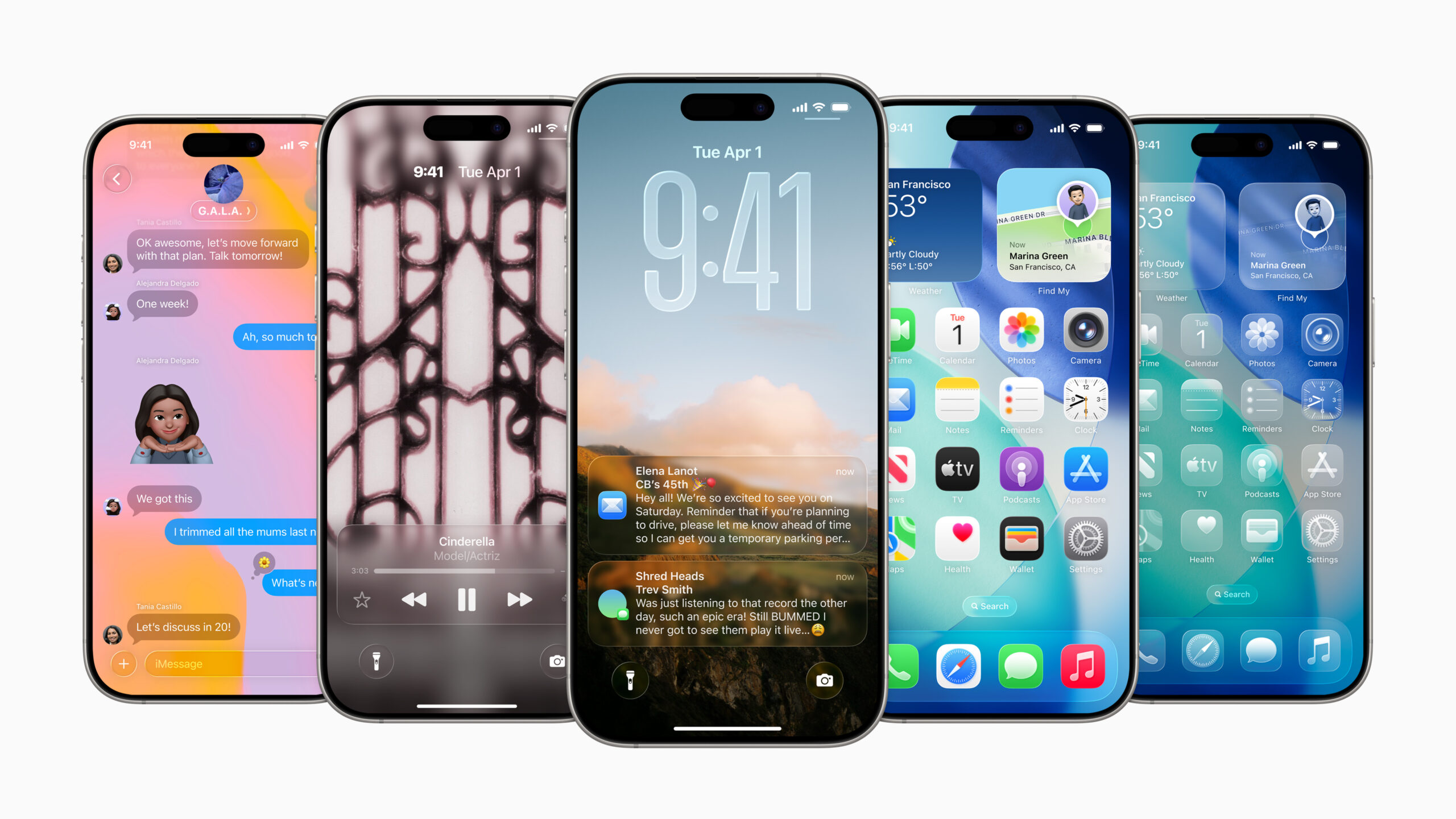
The release delivers a stunning new design, powerful Apple Intelligence capabilities, new ways to stay connected in the Phone and Messages apps, and exciting updates to CarPlay, Apple Music, Maps, and Wallet
CUPERTINO, CALIFORNIA – Apple today previewed iOS 26, a major update that brings a beautiful new design, intelligent experiences, and improvements to the apps users rely on every day. The new design provides a more expressive and delightful experience across the system while maintaining the instant familiarity of iOS. Integrated throughout the system and built with privacy from the ground up, Apple Intelligence gets even more capable. Updates to the Phone and Messages apps help users stay connected while eliminating distractions like unwanted calls. iOS 26 also introduces new features in CarPlay, Apple Music, Maps, and Wallet, as well as Apple Games, a brand-new app that gives players a single destination for all their games.

“iOS 26 shines with the gorgeous new design and meaningful improvements to the features users rely on every day, making iPhone even more helpful,” said Craig Federighi, Apple’s senior vice president of Software Engineering. “Experiences are more expressive and personal, from the Lock Screen and Home Screen, to new capabilities across Phone and Messages that help users focus on the connections that matter most. And with powerful new Apple Intelligence capabilities integrated across the system, users can get things done easier than ever.”
A Beautiful New Look
The new design makes apps and system experiences more expressive and delightful, while keeping iOS instantly familiar. It’s crafted with Liquid Glass — a new translucent material that reflects and refracts its surroundings, bringing greater focus to content, and delivering a new level of vitality across controls, navigation, app icons, widgets, and more. The new design extends to the Home Screen and Lock Screen, making them more personal and expressive than ever. Liquid Glass also brings new customization options to app icons and widgets, including a stunning clear look.
On the Lock Screen, the time fluidly adapts to the available space in an image, and spatial scenes bring wallpapers to life with a 3D effect when users move iPhone. Updated design elements also deliver fresh experiences in apps. A simplified, streamlined Camera layout helps users keep their attention on the moment they’re capturing, and the Photos app is updated to feature separate tabs for Library and Collections views. In Safari, web pages flow from the top edge to the bottom of the screen, enabling users to see more of the page while maintaining access to frequently used actions like refresh and search. In Apple Music, News, and Podcasts, the tab bar is redesigned to float above users’ content, dynamically shrink when users are browsing to put content front and center, and then expand when they scroll back up.
An updated set of APIs provides developers with access to Liquid Glass materials and components so they can make their apps appear just as dynamic and delightful.


New Capabilities Powered by Apple Intelligence
Apple Intelligence elevates the iPhone experience and helps users get things done easier than ever, while unlocking new ways to communicate and do more with what’s on their screen. Live Translation is integrated into Messages, FaceTime, and Phone to help users communicate across languages, translating text and audio on the fly.1 Live Translation is enabled by Apple-built models that run entirely on device, so users’ personal conversations stay personal.
Building on Apple Intelligence, visual intelligence extends to a user’s iPhone screen so they can search and take action on anything they’re viewing across apps. Users can ask ChatGPT questions about what they’re looking at onscreen to learn more, as well as search Google, Etsy, or other supported apps to find similar images and products. Visual intelligence also recognizes when a user is looking at an event and suggests adding it to their calendar, repopulating key details like date, time, and location.2
Genmoji and Image Playground provide users with even more ways to express themselves, including mixing their favorite emoji, Genmoji, and descriptions together to create something new.3
Shortcuts are now more powerful and intelligent than ever. Users can tap into intelligent actions, a whole new set of shortcuts enabled by Apple Intelligence, and will see dedicated actions for features like Writing Tools and Image Playground.
Apple Intelligence can now automatically identify and summarize order tracking details from emails sent from merchants and delivery carriers, giving users the ability to see their full order details and progress notifications all in one place — even for purchases not made with Apple Pay.
Additionally, a new Foundation Models framework opens up access for any app to tap directly into the on-device foundation model at the core of Apple Intelligence, giving developers direct access to powerful intelligence that’s fast, built with privacy at its core, and available offline, using AI inference that is free of cost.


Features for Staying Connected and Eliminating Interruptions
Fundamental to the iPhone experience, the Phone app now offers a unified layout that combines Favorites, Recents, and Voicemails all in one place. Call Screening builds on Live Voicemail and helps eliminate interruptions by gathering information from the caller and giving users the details they need to decide if they want to pick up or ignore the call.4 And for the times when a user is stuck on hold, Hold Assist notifies the user when a live agent is available.5
In Messages, users can now screen messages from unknown senders, giving them more control over who appears in their conversation list. Messages from unknown senders will appear in a dedicated folder where users can then mark the number as known, ask for more information, or delete. These messages will remain silenced until a user accepts them.
iOS 26 also offers enhancements to conversations, including custom backgrounds and the ability to create polls. With Apple Intelligence, Messages can detect when a poll might come in handy and suggest one, and users can generate unique backgrounds that fit their conversation with Image Playground. Additionally, in group chats, users can now see typing indicators, and request, send, and receive Apple Cash.


Enhancements to CarPlay
CarPlay — the smarter, safer way to use iPhone while driving — is used over 600 million times per day, and now with iOS 26, it receives updates that make it even more beautiful and easy to use. The stunning design includes a new compact view for incoming calls, allowing users to see who’s calling without missing key information like upcoming directions. iOS 26 also brings Tapbacks and pinned conversations to Messages in CarPlay, and with widgets and Live Activities, users can stay in the loop without losing focus on the road. These updates also come to CarPlay Ultra, which brings the best of iPhone and the best of the car together for a deeply integrated, unified experience across every screen.
Updates to Apple Music, Maps, and Wallet
In Apple Music, Lyrics Translation helps users understand the words to their favorite songs, while Lyrics Pronunciation allows everyone to sing along, regardless of language. AutoMix uses intelligence to transition from one song to the next like a DJ, using time stretching and beat matching to seamlessly move from one song to the next.
In Apple Maps, Visited Places help users remember the places they’ve been. Users can choose to have iPhone detect when they’re at a place like a restaurant or shop, and view all of their Visited Places in Maps. Visited Places are protected with end-to-end encryption and cannot be accessed by Apple. Additionally, iPhone can now use on-device intelligence to better understand a user’s daily route, presenting them with their preferred route when they’re headed home or to the office, along with notifying them of delays and offering alternate routes.
Updates in Apple Wallet help make everyday interactions with the physical world easier than ever. Users can choose to pay with installments or rewards when they make in-store purchases with Apple Pay using iPhone. Refreshed boarding passes in Wallet offer the ability to see and share Live Activities for real-time updates on a flight. They also provide convenient access to a traveler’s most relevant information, such as Maps to navigate airports, Find My to track important items and report missing bags, and more.


Additional features in iOS 26:
- Apple Games is a new app that gives players an all-in-one destination for their games. It helps players jump back into titles they love, find their next favorite, and have even more fun with friends. They’ll find out what’s happening across all their games, including major events and updates, so they never miss a moment. The Games app is also the best way to experience Apple Arcade, Apple’s game subscription service with more than 200 award-winning and highly rated games for the whole family.
- AirPods are more versatile than ever with new features for AirPods 4, AirPods 4 with Active Noise Cancellation (ANC), and AirPods Pro 2. Building on the benefits of Voice Isolation, studio-quality audio recording allows iPhone, iPad, and Mac users to record their content with great sound quality and enjoy even clearer calls. With camera remote, users can press and hold the AirPods stem to take a photo or start and stop a video recording on iPhone or iPad.
- Parents can now create or move kids into Child Accounts even more easily, taking advantage of a wide set of parental controls designed to keep children safe. Enhancements across Communication Limits, Communication Safety, and the App Store include parental approvals for contact requests from kids, blurring out sensitive content in FaceTime calls and photos in Shared Albums, and enabling parents to grant an exception for their child to download an app with an age rating that exceeds the app content restriction they set.
- Browsing in Safari gets even more private with advanced fingerprinting protection extending to all browsing by default.
- Powerful accessibility features include Accessibility Reader, which provides a customized systemwide reading experience, and Braille Access, an all-new interface for iPhone devices with connected braille displays. Updates to Live Listen, Background Sounds, Personal Voice, and more bring a new level of accessibility across the Apple ecosystem.

Availability
All of these features are available for testing starting today through the Apple Developer Program at developer.apple.com, and a public beta will be available through the Apple Beta Software Program next month at beta.apple.com. New software features will be available this fall as a free software update for iPhone 11 and later. The Apple Intelligence features detailed require supported devices, which include all iPhone 16 models, iPhone 15 Pro, iPhone 15 Pro Max, iPad mini (A17 Pro), and iPad and Mac models with M1 and later that have Apple Intelligence enabled and Siri and device language set to the same supported language: English, French, German, Italian, Portuguese (Brazil), Spanish, Japanese, Korean, or Chinese (simplified). More languages will be coming by the end of this year: Danish, Dutch, Norwegian, Portuguese (Portugal), Swedish, Turkish, Chinese (traditional), and Vietnamese. For more information, visit apple.com/apple-intelligence. Features are subject to change. Some features may not be available in all languages or regions, and availability may vary due to local laws and regulations. For more information about availability, visit apple.com.About Apple Apple revolutionized personal technology with the introduction of the Macintosh in 1984. Today, Apple leads the world in innovation with iPhone, iPad, Mac, AirPods, Apple Watch, and Apple Vision Pro. Apple’s six software platforms — iOS, iPadOS, macOS, watchOS, visionOS, and tvOS — provide seamless experiences across all Apple devices and empower people with breakthrough services including the App Store, Apple Music, Apple Pay, iCloud, and Apple TV+. Apple’s more than 150,000 employees are dedicated to making the best products on earth and to leaving the world better than we found it.

- Live Translation in Messages supports English (U.S., UK), French (France), German, Italian, Japanese, Korean, Portuguese (Brazil), Spanish (Spain), and Chinese (simplified). Live Translation in Phone and FaceTime is available for one-on-one calls in English (U.S., UK), French (France), German, Portuguese (Brazil), and Spanish (Spain).
- The ability to add an event to a calendar with visual intelligence is available in English on all iPhone 16 models, iPhone 15 Pro, and iPhone 15 Pro Max.
- Genmoji and Image Playground are available in English, French, German, Italian, Portuguese (Brazil), Spanish, and Japanese.
- Call Screening supports Cantonese (China mainland, Hong Kong, Macao), English (U.S., Australia, Canada, India, Ireland, New Zealand, Puerto Rico, Singapore, South Africa, UK), French (Canada, France), German (Germany), Japanese (Japan), Korean (Korea), Mandarin Chinese (China mainland, Taiwan, Macao), Portuguese (Brazil), and Spanish (U.S., Mexico, Puerto Rico, Spain).
- Hold Assist supports English (U.S., Australia, Canada, India, Singapore, UK), French (France), Spanish (U.S., Mexico, Spain), German (Germany), Portuguese (Brazil), Japanese (Japan), and Mandarin Chinese (mainland China).
- Apple Cash services are provided by Green Dot Bank, Member FDIC. Apple Payments Services LLC, a subsidiary of Apple Inc., is a service provider of Green Dot Bank for Apple Cash accounts. Neither Apple Inc. nor Apple Payments Services LLC is a bank. Learn more about the terms and conditions. Only available in the U.S. on eligible devices.

apple.com



Science & Tech
The Real Story Behind VLC Media Player: From Student Project to the World’s Most Beloved Cone

You know that familiar orange traffic cone icon? The one that pops up when you desperately need to play some weird video file at midnight, and it just… works? That’s VLC – the media player that’s been quietly saving our bacon for over 25 years. It’s on billions of devices, plays pretty much anything you throw at it (even half-downloaded or scratched-up files), and best of all, it’s completely free, with no ads, no tracking, and no nonsense. But how did this little gem come to be? It’s a story of rebellious students, late-night partying, and one guy’s stubborn refusal to sell out.

It all started back in the late 1990s at École Centrale Paris, one of France’s top engineering schools. A bunch of students were annoyed that their campus network had tons of bandwidth but no good way to stream movies or music to watch together in the dorms. So, they decided to build their own solution – a streaming server and player called VideoLAN (because it was for the local area network, or LAN).
The project kicked off as a fun academic side hustle, but it was technically bending the rules by hogging network resources. The school mostly looked the other way – these were brilliant kids, after all.

Now, about that cone: The students in the networking club had a quirky tradition. They’d “collect” traffic cones from roadworks around campus (you know, after a few parties), and pile them up as decorations or beer-pong obstacles. One night, someone snapped a photo of a cone sitting on a monitor during a coding session, and boom – that became the logo. It’s been the same cheeky orange cone ever since, a perfect symbol of the project’s playful, DIY roots.
Fast forward to 2001: The first public version of the VLC player drops on February 1st. It was clunky, Windows-only, and looked like it was from the ’90s, but it already played almost every format because the students bundled in every open-source codec they could find.
Things almost fell apart a few times. The university tried to claim ownership and turn it commercial. The students’ response? Over a weekend, they relicensed everything under the GNU GPL (a super-strict open-source license), making it impossible for anyone to ever monetize it. Then they broke away and restarted as an independent volunteer project.
Around 2005–2007, when many original contributors graduated and moved on, the project was fading. That’s when Jean-Baptiste Kempf (often called JB) stepped up big time. He’d joined as a student a few years earlier and became the driving force – leading development, keeping it alive, and turning it into the powerhouse it is today.
JB has turned down massive offers – we’re talking tens of millions – to add ads or sell out. He even started a separate company (VideoLabs) to do paid consulting work around video tech, which helps fund things without touching VLC itself. The core player stays pure: run by a global community of volunteers, with the non-profit VideoLAN organization relying mostly on donations.
As of 2025, VLC has racked up over 6 billion downloads. It runs on everything from Windows and Mac to Android, iOS, Linux, and even obscure systems. No ads. No data collection. Just reliable playback, whether you’re watching anime with rare codecs, rescuing old family videos, or streaming something obscure.
Next time that little cone spins up and saves your corrupted file (or just plays your movie without fuss), think of those French students sneaking traffic cones, the weekend licensing rebellion, and JB saying “no” to the big money. VLC isn’t just software – it’s a reminder that some things on the internet can still be genuinely good, free, and built for people, not profit. And honestly? In today’s world, that’s pretty damn heartwarming.

On 9th July, 2025, Earth completed its shortest day since official records began, spinning approximately 1.3 milliseconds faster than the standard 24-hour rotation. While the change went unnoticed in our daily routines, it triggered global attention among scientists and timekeeping institutions that monitor the planet’s rotation with extreme precision.
Experts believe the Moon played a key role in this rare event. When the Moon is positioned farther from Earth’s equator, it can weaken tidal forces that normally act as a brake on Earth’s spin. Other factors such as movement within the Earth’s molten core, changes in ocean currents, and even shifting weather systems could also have contributed to the faster rotation.
Although the difference was just over a millisecond, such variations carry weight in the world of high-precision technology. Systems like GPS, satellite navigation, and financial trading rely on atomic clocks and exact synchronization with Earth’s rotation. A deviation this small can still affect calculations and require adjustments to maintain global accuracy.
This shortened day is not expected to be an isolated case. Scientists have identified similar anomalies expected later this summer, with projections showing that both 22nd July and 5th August may also be milliseconds shorter than usual. If this pattern continues over the next few years, 2029 could see the introduction of the first-ever negative leap second, where a second is subtracted from coordinated universal time.
While most of us will never feel the effect of a day shortened by fractions of a second, the science behind it is a powerful reminder of Earth’s dynamic nature. Our planet is constantly shifting, rotating, and responding to both internal and external forces, sometimes in ways that subtly but significantly reshape how we measure time itself.
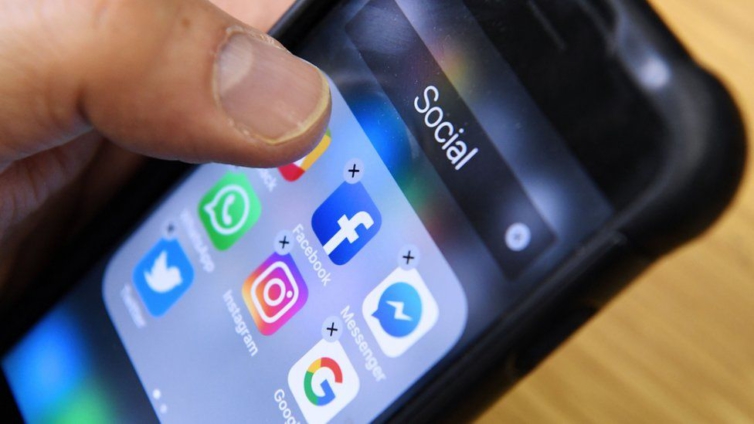
Social media and video networks have become the main source of news in the US, overtaking traditional TV channels and news websites, research suggests.
More than half (54%) of people get news from networks like Facebook, X and YouTube – overtaking TV (50%) and news sites and apps (48%), according to the Reuters Institute.
“The rise of social media and personality-based news is not unique to the United States, but changes seem to be happening faster – and with more impact – than in other countries,” a report found.
Podcaster Joe Rogan was the most widely seen personality, with almost a quarter (22%) of the population saying they had come across news or commentary from him in the previous week.
The report’s author, Nic Newman, said the rise of social video and personality-driven news “represents another significant challenge for traditional publishers”.
The institute also highlighted a trend for some politicians to give their time to sympathetic online hosts rather than mainstream interviewers.
It said populist politicians around the world are “increasingly able to bypass traditional journalism in favour of friendly partisan media, ‘personalities’, and ‘influencers’ who often get special access but rarely ask difficult questions, with many implicated in spreading false narratives or worse”.
Despite their popularity, online influencers and personalities were named as a major source of false or misleading information by almost half of the people worldwide (47%) – putting them level with politicians.
The report also stated that usage of X for news is “stable or increasing across many markets”, with the biggest uplift in the US.
It added that since Elon Musk took over the network in 2022, “many more right-leaning people, notably young men, have flocked to the network, while some progressive audiences have left or are using it less frequently”.
In the US, the proportion that self-identified as being on the right tripled after Musk’s takeover.
In the UK, right-wing X audiences have almost doubled.
Rival networks like Threads, Bluesky and Mastodon are “making little impact globally, with reach of 2% or less for news”, it stated.
Other key findings about news sources:
- TikTok is the fastest-growing social and video network, used for news by 17% of people around the world, up four percentage points since last year.
- The use of AI chatbots to get the news is on the rise, and is twice as popular among under-25s than the population as a whole.
- But most people think AI will make news less transparent, accurate and trustworthy.
- All generations still prize trusted brands with a track record for accuracy, even if they don’t use them as often as they once did
The report is in its 14th year and surveyed almost 100,000 people in 48 countries.
myjoyonline.com


2026 Ballon d’Or Nominees: Full List Of Contenders Across All Categories

Bogo Blay – Achi Guda | MP3 Download

Government Must Scrap F9 Barrier To SHS Admission – Kofi Asare

Vinicius Vows To Deliver Champions League Glory: “We Are Going To Win It”

Inter Dealt Dimarco Blow Ahead Of Bernabeu Clash

Road Projects Making Significant Progress Across Regions, Agbodza Reports

2022 Cohort Teachers Demand 14 Months’ Unpaid Salaries

Police Arrest Suspect Over Alleged Murder Of Dr Jesse Amuah And Wife

Accra Mayor Directs Traders To Sweep Every Hour

14-Year-Old Boy, Mother And Alleged Gang Leader Arrested Over Accra-Kumasi Highway Robbery

Ablakwa: 4,972 Ghanaians Repatriated From Various Countries Since 2025

Police Bust Armed Robbery Gang Targeting Gold Dealers And Mining Sites

Poor Reading Culture, ‘WhatsApp English’ Caused Decline In 2026 WASSCE – WAEC

Over 10 Students Arrested Over Okuapeman-Mount Sinai SHS Clash

Uber Shuts Operations In Nigeria And Uganda With Immediate Effect

GES Releases National Harmonised Prospectus For 2026/27 SHS Admissions

Today’s Newspaper Headlines: Thursday, 3rd September, 2026

Timeless Messi: Four-Goal Haul, Solo Wonder Goal And 7-1 Rout

BREAKING: Barcelona Reach Agreement With Arsenal For Gabriel Jesus

Former Chief Justice Sophia Akuffo Resigns From The Council Of State

FDA destroys counterfeit pharmaceutical products worth GH₵42m

Iran sanction relief could send Cedis soaring at GH₵8 per dollar – Analyst

Bogo Blay – Woman (Produced By FimFim)

Kofi Kinaata Honoured with “Youth in Entertainment” Award at 2025 Millennium Excellence Awards

Efiewura TV series actor Koo Ofori arrested over alleged $50k fraud

‘Not Chosen by Merit’ – Ghanaian Prophet Predicts Short Papacy for Pope Leo XIV

El Clásico Thriller: Barcelona Edges Real Madrid 4–3 in Seven-Goal Spectacle

The differences between ‘I love you’ and ‘I’m in love with you’

Webz – Odo | MP3 Download

Today In History: May 9th Disaster at the Accra Sports Stadium

Ban on Drumming and Noise Making in Accra to Begin May 12 Ahead of Homowo Festival

VIDEO: Bosomtwe Road Conditions Spark Concerns Over Dust Pollution

Alonso To Leave Leverkusen At End Of The Season

EVENT: Feyiase English Assembly Set for an Explosive Praise and Worship Experience!

VIDEO: Vladimir Putin Welcomes Burkina Faso’s Ibrahim Traoré to Russia for Victory Day Celebrations

Newspaper Headlines: Friday, 9th May, 2025

Two Kidnapped Ghanaian Women Return from Nigeria, CID Confirms

Tamale Drug Dealer Fined Gh₵1.68M, Faces 25 Years In Jail Over Tramadol Bust

How Ghana lost over GH¢2bn swapping gold for fuel

Ameyaw-Akumfi granted GH¢10m bail

Sarkodie – Everlasting Ft. Shatta Wale | MP3 Download

Mexico 2-0 South Africa: Hosts Kick Off World Cup In Style With A Win Over Bafana Bafana

700 More Ghanaians To Be Repatriated From South Africa On Saturday And Sunday

VIDEO: Ga East Assembly Demolishes Structures In Waterways To Curb Flooding

WASSCE 2026: KNUST SHS Records One Death, Another Candidate Pregnant – VIDEO

Voxy Driver In Viral Video Jailed For Careless Driving

VIDEO: Headmistress Of Spiritan SHTS Appeals For Urgent Fencing And Infrastructure Support

Barcelona 3-2 Real Madrid: Raphinha Brace Inspires Catalans To Super Cup Victory

VIDEO: Black Stars Will Reach The Final Of 2026 World Cup – Prophet Nigel Gaisie

VIDEO: Ontario Police Bust International Car Theft Ring Including Ghanaian With 306 Stolen Vehicles Recovered

VIDEO: Live Feed Of Funeral Rites For Daddy Lumba

VIDEO: FC Haka Fans Burn Their Own Stadium After Relegation

Africa Cup of Nations 2025: Dates, Fixtures & Everything To Expect In Morocco

Ronaldinho Reigns Supreme: GiveMeSport Names Him the Greatest Dribbler of All Time

VIDEO: Police Arrest Man Seen In Viral Video Forcing Child To Smoke

Barcelona 3-0 Getafe: Catalans Cruise to Convincing Win

Arsenal 1-1 Manchester City: Martinelli Strikes Late to Deny Guardiola’s Men

VIDEO: 2025 World Athletics Championships – Ghana Dominates 4×100 Relays To Qualify For Finals

Liverpool 2-1 Everton: Reds Extend Perfect Start with Merseyside Derby Win

VIDEO: Asantehemaa’s Reign Was Marked By Dignity, Humility And Service – Asantehene
-
 News1 year ago
FDA destroys counterfeit pharmaceutical products worth GH₵42m
-
 Business1 year ago
Iran sanction relief could send Cedis soaring at GH₵8 per dollar – Analyst
-
 Showbiz1 year ago
Bogo Blay – Woman (Produced By FimFim)
-
 Showbiz1 year ago
Kofi Kinaata Honoured with “Youth in Entertainment” Award at 2025 Millennium Excellence Awards
-
 People & Lifestyle1 year ago
Efiewura TV series actor Koo Ofori arrested over alleged $50k fraud
-
 News1 year ago
‘Not Chosen by Merit’ – Ghanaian Prophet Predicts Short Papacy for Pope Leo XIV
-
 Sports1 year ago
El Clásico Thriller: Barcelona Edges Real Madrid 4–3 in Seven-Goal Spectacle
-
 People & Lifestyle1 year ago
The differences between ‘I love you’ and ‘I’m in love with you’