
News
Over 3500 Students Affected By Unaccredited Tertiary Institutions – PUSAG


Over 3,500 Ghanaian students from 22 unaccredited tertiary institutions are facing a looming crisis as their academic qualifications are rendered invalid, potentially jeopardising their mandatory national service and future employment prospects.
This alarming figure was revealed by the Private Universities Students’ Association of Ghana (PUSAG) in a statement as it commended efforts by the Ghana Tertiary Education Commission (GTEC) to crack down on rogue institutions.
Ibrahim Issah, National President of PUSAG, issued an appeal to the public to address the situation.
“PUSAG urges all students, parents, and guardians to verify the accreditation status of any tertiary institution before enrolling. Information can be confirmed directly via the GTEC website or through PUSAG’s helpdesk.”
He further called on the media, civil society, and the general public to support the national campaign against academic fraud, underscoring that “Education is not just a personal aspiration—it is a national asset that must be protected.”
The intensified crackdown by GTEC, coupled with PUSAG’s robust advocacy, signals a critical period for quality assurance in Ghana’s tertiary education sector.
The ultimate goal is to ensure that every Ghanaian student’s investment in education leads to accredited, recognised, and respected qualifications, thereby securing their future and contributing meaningfully to national development.
The dire situation for these 3,500-plus students is not new but represents a compounding of a persistent problem as the National Service Authority (NSA) tackles the issue of “ghost names” that have plagued the system.
Students who enrol in unapproved institutions face a multifaceted and devastating blow to their educational and career aspirations:
- Ineligibility for National Service: National service is a compulsory one-year requirement for all Ghanaian graduates from accredited tertiary institutions, aged 18 and above. Without it, graduates are largely barred from formal sector employment, particularly in public service and many private companies.
- Disqualification from Students Loan Trust Fund (SLTF): The SLTF explicitly requires students to be admitted to an “accredited tertiary programme in an accredited tertiary institution in Ghana” to qualify for a loan. This means thousands of students who desperately need financial aid are denied support, often after having invested substantial personal or family funds into these unaccredited programmes.
- Rejection of Academic Qualifications: Degrees and certificates from unaccredited institutions hold no weight. Employers in Ghana, both public and private, do not recognise them. Similarly, accredited local and international postgraduate institutions will outright reject such qualifications, effectively closing doors to further academic and professional advancement. This often leaves students with a mountain of debt and worthless paper.
PUSAG’s Proactive Response:
Recognising the gravity of the situation, PUSAG, as the national student body for private tertiary institutions, has detailed proactive measures to empower students and combat this systemic fraud:
- Accreditation Verification Drive: PUSAG has launched a nationwide exercise to verify the accreditation status of every private university and college in Ghana. This initiative aims to create an independent, accessible resource for students to cross-reference official GTEC data and make informed choices.
- Public Awareness Campaigns: The association plans joint education drives with GTEC to widely disseminate information on how prospective students and their families can verify an institution’s accreditation status and avoid falling victim to scams. GTEC’s official website remains the primary source for verifying accreditation.
- Policy Advocacy and Collaboration: PUSAG is committed to ongoing collaboration with GTEC and other stakeholders to strengthen enforcement mechanisms and close regulatory loopholes that continue to allow these “rogue institutions” to operate. This includes advocating for stricter penalties under the Education Regulatory Bodies Act, 2020 (Act 1023), which empowers GTEC to sanction institutions operating contrary to established norms and standards.
myjoyonline.com

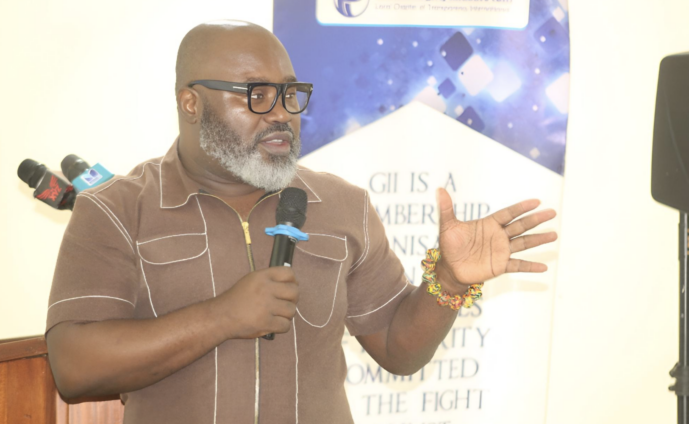
The Executive Director of Africa Education Watch (Eduwatch), Kofi Asare, has called on the government to permanently scrap the use of F9 grades as a barrier to admission into senior high school (SHS).
According to him, every Ghanaian child who completes basic education should have the right to progress to secondary education regardless of their BECE results.
His comments come amid the ongoing 2026 Computerised School Selection and Placement System (CSSPS) exercise, where 55,000 candidates did not qualify for placement primarily because they obtained a Grade 9 in either core English Language or Mathematics.
Mr Asare said while Eduwatch welcomes the government’s decision to allow students who obtain F9 grades to proceed to SHS, the policy should be formally embedded in the Free SHS framework to prevent changes from being made at the discretion of successive governments.
“We have recommended that government should amend or review the Free Senior High School policy document. The policy document must have enshrined in it the requirement to qualify for secondary education. We must waive that F9 thing there.
“There is no qualification to enter secondary education once one completes basic education, so that we don’t be going back and forth year by year, so that it becomes at the discretion of a politician that this year F9 will go, next year F9 will not go.”
Mr Asare maintained that denying students access to SHS because of poor BECE grades would be unfair, particularly because government has a responsibility to provide adequate teaching and learning conditions.
He noted that students who record F9 grades are disproportionately found in deprived areas, including the five northern regions, Oti and Western North.
According to him, challenges such as teacher shortages, inadequate textbooks and lack of basic furniture in some schools can contribute to poor academic outcomes.
“Until government provides adequate facilities across urban, peri-urban and deprived areas, you cannot punish pupils for having F9 in Maths and deny them an opportunity to enter Free Senior High School.”
“Every Ghanaian that completes basic school must enter secondary education regardless of their grades.”
He said Ghana should aspire to a system where no child is denied secondary education because of academic performance at the basic level.
Mr Asare also welcomed the current approach of allowing students who may have obtained F9 grades to proceed to SHS, describing it as a step towards ensuring universal access.
myjoyonline.com

The Minister for Roads and Highways, Governs Kwame Agbodza, says significant progress has been made on major road projects across the country following a nationwide inspection tour.
The Minister said contractors working on projects in the Bono, Upper West, Upper East and Northern Regions have generally performed well, despite delays recorded on some projects.
Speaking to Citi News after concluding his inspection tour, Agbodza said the assessment showed improvements in the pace of work compared to his previous visit.
He, however, acknowledged that some projects have experienced delays and slippages, resulting in adjustments to the scope of work on certain contracts.
“Those we think that it would be too risky to keep with the same volume of work, we have de-scoped. But generally, we have seen great progress from the last time we were here, so we want to encourage everybody to keep working,” he said.
Agbodza urged contractors to sustain the current momentum and ensure that projects are completed within their scheduled timelines.
citinewsroom.com
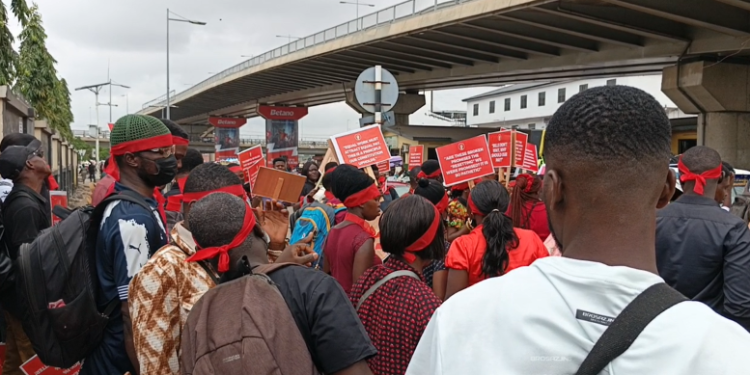
Some teachers from the 2022 cohort of Colleges of Education graduates have staged a protest over 14 months of unpaid salaries, demanding urgent action from the government.
The teachers say they have been waiting for their salaries since 2025 despite several engagements with relevant stakeholders, including the Ministry of Education, as well as a previous protest over the issue.
According to the group, the prolonged delay has placed significant financial strain on affected teachers, many of whom have accumulated debts while struggling to meet their basic needs.
The teachers are also demanding the issuance of staff identification cards to affected members who are yet to receive them.

As part of the protest, the group intends to petition the Ministry of Finance, the Jubilee House, the Ministry of Education and the Ghana Education Service to intervene and resolve the matter.
Speaking to Citi News, one of the affected teachers said the government’s failure to pay them had left many struggling to meet basic household expenses.
“The government intentionally paid some teachers and left some teachers. For the past 14 months, we have not been paid; we have accumulated debt upon debt. For some of us, paying electricity bills has become a problem; paying water bills has become a problem.
“In fact, we can’t even handle basic things; we can’t even buy boxer shorts for ourselves because we have accumulated so much debt to the extent that whenever we are paid our one-month salaries, our debtors come after us, taking our money,” he said.
The teachers are therefore calling on the government to settle all outstanding salaries and address the administrative challenges affecting their employment, including the delay in issuing staff identification cards.
citinewsroom.com


2026 Ballon d’Or Nominees: Full List Of Contenders Across All Categories

Bogo Blay – Achi Guda | MP3 Download

Government Must Scrap F9 Barrier To SHS Admission – Kofi Asare

Vinicius Vows To Deliver Champions League Glory: “We Are Going To Win It”

Inter Dealt Dimarco Blow Ahead Of Bernabeu Clash

Road Projects Making Significant Progress Across Regions, Agbodza Reports

2022 Cohort Teachers Demand 14 Months’ Unpaid Salaries

Police Arrest Suspect Over Alleged Murder Of Dr Jesse Amuah And Wife

Accra Mayor Directs Traders To Sweep Every Hour

14-Year-Old Boy, Mother And Alleged Gang Leader Arrested Over Accra-Kumasi Highway Robbery

Ablakwa: 4,972 Ghanaians Repatriated From Various Countries Since 2025

Police Bust Armed Robbery Gang Targeting Gold Dealers And Mining Sites

Poor Reading Culture, ‘WhatsApp English’ Caused Decline In 2026 WASSCE – WAEC

Over 10 Students Arrested Over Okuapeman-Mount Sinai SHS Clash

Uber Shuts Operations In Nigeria And Uganda With Immediate Effect

GES Releases National Harmonised Prospectus For 2026/27 SHS Admissions

Today’s Newspaper Headlines: Thursday, 3rd September, 2026

Timeless Messi: Four-Goal Haul, Solo Wonder Goal And 7-1 Rout

BREAKING: Barcelona Reach Agreement With Arsenal For Gabriel Jesus

Former Chief Justice Sophia Akuffo Resigns From The Council Of State

FDA destroys counterfeit pharmaceutical products worth GH₵42m

Iran sanction relief could send Cedis soaring at GH₵8 per dollar – Analyst

Bogo Blay – Woman (Produced By FimFim)

Kofi Kinaata Honoured with “Youth in Entertainment” Award at 2025 Millennium Excellence Awards

Efiewura TV series actor Koo Ofori arrested over alleged $50k fraud

‘Not Chosen by Merit’ – Ghanaian Prophet Predicts Short Papacy for Pope Leo XIV

El Clásico Thriller: Barcelona Edges Real Madrid 4–3 in Seven-Goal Spectacle

The differences between ‘I love you’ and ‘I’m in love with you’

Webz – Odo | MP3 Download

Today In History: May 9th Disaster at the Accra Sports Stadium

Ban on Drumming and Noise Making in Accra to Begin May 12 Ahead of Homowo Festival

VIDEO: Bosomtwe Road Conditions Spark Concerns Over Dust Pollution

Alonso To Leave Leverkusen At End Of The Season

EVENT: Feyiase English Assembly Set for an Explosive Praise and Worship Experience!

VIDEO: Vladimir Putin Welcomes Burkina Faso’s Ibrahim Traoré to Russia for Victory Day Celebrations

Newspaper Headlines: Friday, 9th May, 2025

Two Kidnapped Ghanaian Women Return from Nigeria, CID Confirms

Tamale Drug Dealer Fined Gh₵1.68M, Faces 25 Years In Jail Over Tramadol Bust

How Ghana lost over GH¢2bn swapping gold for fuel

Ameyaw-Akumfi granted GH¢10m bail

Sarkodie – Everlasting Ft. Shatta Wale | MP3 Download

Mexico 2-0 South Africa: Hosts Kick Off World Cup In Style With A Win Over Bafana Bafana

700 More Ghanaians To Be Repatriated From South Africa On Saturday And Sunday

VIDEO: Ga East Assembly Demolishes Structures In Waterways To Curb Flooding

WASSCE 2026: KNUST SHS Records One Death, Another Candidate Pregnant – VIDEO

Voxy Driver In Viral Video Jailed For Careless Driving

VIDEO: Headmistress Of Spiritan SHTS Appeals For Urgent Fencing And Infrastructure Support

Barcelona 3-2 Real Madrid: Raphinha Brace Inspires Catalans To Super Cup Victory

VIDEO: Black Stars Will Reach The Final Of 2026 World Cup – Prophet Nigel Gaisie

VIDEO: Ontario Police Bust International Car Theft Ring Including Ghanaian With 306 Stolen Vehicles Recovered

VIDEO: Live Feed Of Funeral Rites For Daddy Lumba

VIDEO: FC Haka Fans Burn Their Own Stadium After Relegation

Africa Cup of Nations 2025: Dates, Fixtures & Everything To Expect In Morocco

Ronaldinho Reigns Supreme: GiveMeSport Names Him the Greatest Dribbler of All Time

VIDEO: Police Arrest Man Seen In Viral Video Forcing Child To Smoke

Barcelona 3-0 Getafe: Catalans Cruise to Convincing Win

Arsenal 1-1 Manchester City: Martinelli Strikes Late to Deny Guardiola’s Men

VIDEO: 2025 World Athletics Championships – Ghana Dominates 4×100 Relays To Qualify For Finals

Liverpool 2-1 Everton: Reds Extend Perfect Start with Merseyside Derby Win

VIDEO: Asantehemaa’s Reign Was Marked By Dignity, Humility And Service – Asantehene
-
 News1 year ago
FDA destroys counterfeit pharmaceutical products worth GH₵42m
-
 Business1 year ago
Iran sanction relief could send Cedis soaring at GH₵8 per dollar – Analyst
-
 Showbiz1 year ago
Bogo Blay – Woman (Produced By FimFim)
-
 Showbiz1 year ago
Kofi Kinaata Honoured with “Youth in Entertainment” Award at 2025 Millennium Excellence Awards
-
 People & Lifestyle1 year ago
Efiewura TV series actor Koo Ofori arrested over alleged $50k fraud
-
 News1 year ago
‘Not Chosen by Merit’ – Ghanaian Prophet Predicts Short Papacy for Pope Leo XIV
-
 Sports1 year ago
El Clásico Thriller: Barcelona Edges Real Madrid 4–3 in Seven-Goal Spectacle
-
 People & Lifestyle1 year ago
The differences between ‘I love you’ and ‘I’m in love with you’