
News
How A Single Meme Can Jeopardise Your Trip


Social media posts deemed dangerous or offensive can increasingly lead to visa denial or online backlash. Here’s what global travelers need to know.
Last week, the US government announced plans to scrutinise five years’ worth of social media posts by visitors from dozens of countries who are eligible to visit the US for 90 days without a visa. While the specific details of the proposal remain unclear, the American public has several weeks to submit comments responding to the plan before it takes effect on 8 February 2026. Among other information, ESTA visa-free applicants will need to provide all email addresses used over the past 10 years.
The proposal reflects a recent trend of increased scrutiny of visitors to the US, where travellers’ digital footprints may now be used as grounds to bar them from entering or to deport them from the country. Earlier this year, a Norwegian tourist claimed he was denied entry to the US after officials searched his phone and found a meme of Vice President JD Vance. US Customs and Border Patrol (CBP) denies the claim, stating that the decision was because of the Norwegian’s “admitted drug use”. The CBP site notes that “border searches of electronic devices are often integral to determining an individual’s intentions upon entry to the United States”.
Since returning to the White House in January, President Donald Trump has sought to secure the US’s borders, citing national security reasons. But some experts say the new plan could pose an additional obstacle that deters would-be travellers.
Border searches go digital
Donald Rothwell, a law professor at Australian National University and regular commentator on international legal issues, is one of many who are now cautious of travelling to the US, as he says the visitor experience is becoming increasingly fraught.
If on arrival at a US border a foreign visitor fails to comply with a CBP border official request, they can be denied entry – Donald Rothwell
“Currently, under the Visa Waiver Program, which allows visitors from 42 countries to enter the US using the ESTA process, they possess very little rights at the border,” he cautions.
“This partly arises because in applying under the Visa Waiver Program, [visitors] waive some of their US legal rights to contest certain decisions made by US CBP [Customs and Border Protection] at the border. So, if on arrival at a US border a foreign visitor fails to comply with a CBP border official request, they can be denied entry.” His advice for visitors: be highly cautious about what you post online with respect to matters that may relate to US policy or individual Americans.

Looking further ahead, Rothwell theorises that increasing digitisation is likely to make high levels of scrutiny far more common – and easier to implement: “If travel is going to become ‘borderless’, it follows that more digital data will be collected on travellers.” More data, he adds, provides authorities greater confidence that the visitor does not pose a security threat. “I suspect that we will see an increasing use of AI being used to make these decisions,” he says.
Think before you post
The US is far from the only nation to implement such surveillance measures. Governments around the world are increasingly monitoring travellers’ social media activity, and a person’s digital footprint can still cause problems long after they cross a border. In 2018, New Zealand introduced what they said was the world’s first law allowing border officials to demand access to travellers’ phones, with hefty fines for those who refuse to share their passwords. The United Arab Emirates goes further still: authorities can detain foreigners who post or even repost defamatory content, as one Irishman discovered last year when he left a negative online review of a former local employer.
The risks are also rising because travellers are generating ever-increasing volumes of potentially sensitive content. A survey of British travellers by Virgin Mobile found that more than half “can’t imagine not taking pictures on holiday”, typically uploading seven images a week to social media. In the arms race of “travel porn”, many users get competitive. One-in-10 survey respondents said they would go to extreme lengths for a holiday selfie, including standing on a cliff edge or posing with wild animals.
The problem is that those shots are often taken without regard for local norms, leading to backlash that can quickly escalate. In 2022, a Russian influencer and her husband were deported from Bali after staging a nude photoshoot under a sacred tree. Shortly after the photos were uploaded to social media, local politician Niluh Djelantic asked fellow citizens to report the influencer to the police. “She should be responsible for the cost of the cleaning ceremony to be carried out by villagers,” Djelantik wrote. “Trashy tourist. Go home!”
Incidents like this have led to governments scrambling to educate their globe-trotting citizens, with web pages dedicated to ever-shifting social media etiquette abroad, or cultural norms that many travellers may not realise exist. Canada’s government portal, for example, warns that in Thailand it is illegal to promote alcohol consumption, and you can be fined for posting pictures with alcohol on social media.
The spectrum of misunderstanding
Sucheta Rawal, a travel keynote speaker and children’s book author, has experienced how quickly a holiday post can spiral. On a trip to Africa last year, one of her posts was viewed by a contact, who then angrily reshared it globally. “I didn’t feel I was being insensitive,” she says, “but it led to misinterpretation, blame and hostility towards me, which made the rest of my trip very difficult. All content is vulnerable – whether you are posting personally or privately. In today’s environment, it is not very difficult to take comments out of context, or to thread them into stories that you did not intend to be told.”

At a time when more travellers are becoming content creators and posting gigabytes of material every month, the scope for misunderstanding grows. “When I was writing Beato Goes to Japan,” says Rawal, “I realised that I had to be mindful of so many subtle cultural nuances in my images.” The wrapping of a yukata (summer kimono) differs between living people and corpses, she notes, while facing your back to a torii gate, the entrance to a Shinto shrine, is disrespectful.
As travel photography becomes increasingly performative, millions of people take selfies wearing local clothing or visiting religious shrines. Such missteps can offend those nearby long before an image is posted online.
Context is everything
Often, it is unfamiliarity with cultural norms – rather than malice – that lies behind these incidents. For example, Japan, along with many Asian and Middle Eastern nations, is an example of a “high-context society“. In a talk on the subject, intercultural communication expert Erin Meyer explains that in such cultures, communication “is more implicit, or layered or nuanced”, and much is said through symbolic gestures or implied understanding.
Travellers from “low-context societies”, which prioritise direct verbal communication, may find such layered, understated communication a minefield of potential rudeness – one where even if you avoid words, you don’t necessarily avoid causing offence. When social posts today come with the option of adding a plethora of emojis, a simple video upload at a foreign fruit market, with an accompanying watermelon icon could easily trigger viewers who see that as a sign of antisemitism or a racist stereotype against black Americans.
Don’t turn local people into objects just because you are a traveller – Sucheta Rawal
None of this means holidaymakers should censor themselves entirely for fear of backlash. Instead, the best approach may be to simply post more consciously, prioritising quality over quantity rather than feeding algorithms or expectations.
“Awareness is often gained by being fully aware and present of your surroundings,” says Rawal. “Observe how people around you dress, speak, act, and try to blend in as best as you can. Don’t turn local people into objects just because you are a traveller.”
The result is not just a safer and more meaningful trip, but one where you connect respectfully with cultural sites rather than simply turning them into content.
bbc.com



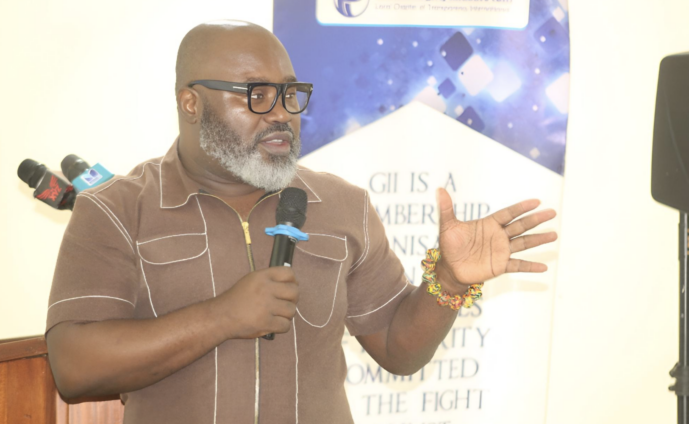
The Executive Director of Africa Education Watch (Eduwatch), Kofi Asare, has called on the government to permanently scrap the use of F9 grades as a barrier to admission into senior high school (SHS).
According to him, every Ghanaian child who completes basic education should have the right to progress to secondary education regardless of their BECE results.
His comments come amid the ongoing 2026 Computerised School Selection and Placement System (CSSPS) exercise, where 55,000 candidates did not qualify for placement primarily because they obtained a Grade 9 in either core English Language or Mathematics.
Mr Asare said while Eduwatch welcomes the government’s decision to allow students who obtain F9 grades to proceed to SHS, the policy should be formally embedded in the Free SHS framework to prevent changes from being made at the discretion of successive governments.
“We have recommended that government should amend or review the Free Senior High School policy document. The policy document must have enshrined in it the requirement to qualify for secondary education. We must waive that F9 thing there.
“There is no qualification to enter secondary education once one completes basic education, so that we don’t be going back and forth year by year, so that it becomes at the discretion of a politician that this year F9 will go, next year F9 will not go.”
Mr Asare maintained that denying students access to SHS because of poor BECE grades would be unfair, particularly because government has a responsibility to provide adequate teaching and learning conditions.
He noted that students who record F9 grades are disproportionately found in deprived areas, including the five northern regions, Oti and Western North.
According to him, challenges such as teacher shortages, inadequate textbooks and lack of basic furniture in some schools can contribute to poor academic outcomes.
“Until government provides adequate facilities across urban, peri-urban and deprived areas, you cannot punish pupils for having F9 in Maths and deny them an opportunity to enter Free Senior High School.”
“Every Ghanaian that completes basic school must enter secondary education regardless of their grades.”
He said Ghana should aspire to a system where no child is denied secondary education because of academic performance at the basic level.
Mr Asare also welcomed the current approach of allowing students who may have obtained F9 grades to proceed to SHS, describing it as a step towards ensuring universal access.
myjoyonline.com

The Minister for Roads and Highways, Governs Kwame Agbodza, says significant progress has been made on major road projects across the country following a nationwide inspection tour.
The Minister said contractors working on projects in the Bono, Upper West, Upper East and Northern Regions have generally performed well, despite delays recorded on some projects.
Speaking to Citi News after concluding his inspection tour, Agbodza said the assessment showed improvements in the pace of work compared to his previous visit.
He, however, acknowledged that some projects have experienced delays and slippages, resulting in adjustments to the scope of work on certain contracts.
“Those we think that it would be too risky to keep with the same volume of work, we have de-scoped. But generally, we have seen great progress from the last time we were here, so we want to encourage everybody to keep working,” he said.
Agbodza urged contractors to sustain the current momentum and ensure that projects are completed within their scheduled timelines.
citinewsroom.com
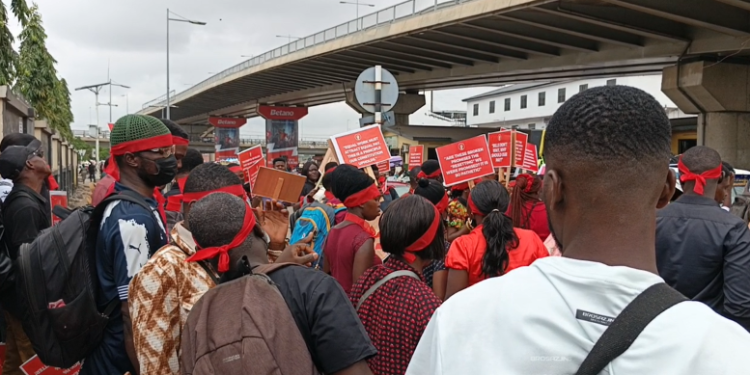
Some teachers from the 2022 cohort of Colleges of Education graduates have staged a protest over 14 months of unpaid salaries, demanding urgent action from the government.
The teachers say they have been waiting for their salaries since 2025 despite several engagements with relevant stakeholders, including the Ministry of Education, as well as a previous protest over the issue.
According to the group, the prolonged delay has placed significant financial strain on affected teachers, many of whom have accumulated debts while struggling to meet their basic needs.
The teachers are also demanding the issuance of staff identification cards to affected members who are yet to receive them.

As part of the protest, the group intends to petition the Ministry of Finance, the Jubilee House, the Ministry of Education and the Ghana Education Service to intervene and resolve the matter.
Speaking to Citi News, one of the affected teachers said the government’s failure to pay them had left many struggling to meet basic household expenses.
“The government intentionally paid some teachers and left some teachers. For the past 14 months, we have not been paid; we have accumulated debt upon debt. For some of us, paying electricity bills has become a problem; paying water bills has become a problem.
“In fact, we can’t even handle basic things; we can’t even buy boxer shorts for ourselves because we have accumulated so much debt to the extent that whenever we are paid our one-month salaries, our debtors come after us, taking our money,” he said.
The teachers are therefore calling on the government to settle all outstanding salaries and address the administrative challenges affecting their employment, including the delay in issuing staff identification cards.
citinewsroom.com


2026 Ballon d’Or Nominees: Full List Of Contenders Across All Categories

Bogo Blay – Achi Guda | MP3 Download

Government Must Scrap F9 Barrier To SHS Admission – Kofi Asare

Vinicius Vows To Deliver Champions League Glory: “We Are Going To Win It”

Inter Dealt Dimarco Blow Ahead Of Bernabeu Clash

Road Projects Making Significant Progress Across Regions, Agbodza Reports

2022 Cohort Teachers Demand 14 Months’ Unpaid Salaries

Police Arrest Suspect Over Alleged Murder Of Dr Jesse Amuah And Wife

Accra Mayor Directs Traders To Sweep Every Hour

14-Year-Old Boy, Mother And Alleged Gang Leader Arrested Over Accra-Kumasi Highway Robbery

Ablakwa: 4,972 Ghanaians Repatriated From Various Countries Since 2025

Police Bust Armed Robbery Gang Targeting Gold Dealers And Mining Sites

Poor Reading Culture, ‘WhatsApp English’ Caused Decline In 2026 WASSCE – WAEC

Over 10 Students Arrested Over Okuapeman-Mount Sinai SHS Clash

Uber Shuts Operations In Nigeria And Uganda With Immediate Effect

GES Releases National Harmonised Prospectus For 2026/27 SHS Admissions

Today’s Newspaper Headlines: Thursday, 3rd September, 2026

Timeless Messi: Four-Goal Haul, Solo Wonder Goal And 7-1 Rout

BREAKING: Barcelona Reach Agreement With Arsenal For Gabriel Jesus

Former Chief Justice Sophia Akuffo Resigns From The Council Of State

FDA destroys counterfeit pharmaceutical products worth GH₵42m

Iran sanction relief could send Cedis soaring at GH₵8 per dollar – Analyst

Bogo Blay – Woman (Produced By FimFim)

Kofi Kinaata Honoured with “Youth in Entertainment” Award at 2025 Millennium Excellence Awards

Efiewura TV series actor Koo Ofori arrested over alleged $50k fraud

‘Not Chosen by Merit’ – Ghanaian Prophet Predicts Short Papacy for Pope Leo XIV

El Clásico Thriller: Barcelona Edges Real Madrid 4–3 in Seven-Goal Spectacle

The differences between ‘I love you’ and ‘I’m in love with you’

Webz – Odo | MP3 Download

Today In History: May 9th Disaster at the Accra Sports Stadium

Ban on Drumming and Noise Making in Accra to Begin May 12 Ahead of Homowo Festival

VIDEO: Bosomtwe Road Conditions Spark Concerns Over Dust Pollution

Alonso To Leave Leverkusen At End Of The Season

EVENT: Feyiase English Assembly Set for an Explosive Praise and Worship Experience!

VIDEO: Vladimir Putin Welcomes Burkina Faso’s Ibrahim Traoré to Russia for Victory Day Celebrations

Newspaper Headlines: Friday, 9th May, 2025

Two Kidnapped Ghanaian Women Return from Nigeria, CID Confirms

Tamale Drug Dealer Fined Gh₵1.68M, Faces 25 Years In Jail Over Tramadol Bust

How Ghana lost over GH¢2bn swapping gold for fuel

Ameyaw-Akumfi granted GH¢10m bail

Sarkodie – Everlasting Ft. Shatta Wale | MP3 Download

Mexico 2-0 South Africa: Hosts Kick Off World Cup In Style With A Win Over Bafana Bafana

700 More Ghanaians To Be Repatriated From South Africa On Saturday And Sunday

VIDEO: Ga East Assembly Demolishes Structures In Waterways To Curb Flooding

WASSCE 2026: KNUST SHS Records One Death, Another Candidate Pregnant – VIDEO

Voxy Driver In Viral Video Jailed For Careless Driving

VIDEO: Headmistress Of Spiritan SHTS Appeals For Urgent Fencing And Infrastructure Support

Barcelona 3-2 Real Madrid: Raphinha Brace Inspires Catalans To Super Cup Victory

VIDEO: Black Stars Will Reach The Final Of 2026 World Cup – Prophet Nigel Gaisie

VIDEO: Ontario Police Bust International Car Theft Ring Including Ghanaian With 306 Stolen Vehicles Recovered

VIDEO: Live Feed Of Funeral Rites For Daddy Lumba

VIDEO: FC Haka Fans Burn Their Own Stadium After Relegation

Africa Cup of Nations 2025: Dates, Fixtures & Everything To Expect In Morocco

Ronaldinho Reigns Supreme: GiveMeSport Names Him the Greatest Dribbler of All Time

VIDEO: Police Arrest Man Seen In Viral Video Forcing Child To Smoke

Barcelona 3-0 Getafe: Catalans Cruise to Convincing Win

Arsenal 1-1 Manchester City: Martinelli Strikes Late to Deny Guardiola’s Men

VIDEO: 2025 World Athletics Championships – Ghana Dominates 4×100 Relays To Qualify For Finals

Liverpool 2-1 Everton: Reds Extend Perfect Start with Merseyside Derby Win

VIDEO: Asantehemaa’s Reign Was Marked By Dignity, Humility And Service – Asantehene
-
 News1 year ago
FDA destroys counterfeit pharmaceutical products worth GH₵42m
-
 Business1 year ago
Iran sanction relief could send Cedis soaring at GH₵8 per dollar – Analyst
-
 Showbiz1 year ago
Bogo Blay – Woman (Produced By FimFim)
-
 Showbiz1 year ago
Kofi Kinaata Honoured with “Youth in Entertainment” Award at 2025 Millennium Excellence Awards
-
 People & Lifestyle1 year ago
Efiewura TV series actor Koo Ofori arrested over alleged $50k fraud
-
 News1 year ago
‘Not Chosen by Merit’ – Ghanaian Prophet Predicts Short Papacy for Pope Leo XIV
-
 Sports1 year ago
El Clásico Thriller: Barcelona Edges Real Madrid 4–3 in Seven-Goal Spectacle
-
 People & Lifestyle1 year ago
The differences between ‘I love you’ and ‘I’m in love with you’