
News
What Body Odour Reveals About Your Health


We emit a barrage of whiffy chemicals through our pores and in our breath. Some are a sign that we might be getting ill – and could be used to diagnose diseases up to years in advance.
It was obviously nonsense. That was how analytical chemist Perdita Barran reacted when a colleague told her about a Scottish woman who claimed she could smell Parkinson’s disease.
“She’s probably just smelling old people and recognising symptoms of Parkinson’s and making some association,” Barran remembers thinking. The woman, a 74-year-old retired nurse called Joy Milne, had approached Barran’s colleague Tilo Kunath, a neuroscientist at the University Edinburgh, at an event he was speaking at in 2012.
Milne told Kunath that she had first discovered her ability after noticing her husband, Les, had developed a new musky odour years earlier. He was later diagnosed with Parkinson’s disease, a progressive neurodegenerative illness characterised by tremors and other motor symptoms. It was only when Milne attended a group meeting for Parkinson’s patients in her home town of Perth, Scotland, that she made the connection: all the patients had the same musky smell.
“So, we then decided to test whether she was right,” says Barran, who worked at the University of Edinburgh at the time but is now at the University of Manchester.
It turned out that Milne was no time-waster. Kunath, Barran and colleagues asked Milne to sniff 12 T-shirts, six of which had recently been worn by Parkinson’s patients, alongside six worn by others without the disease. She correctly identified the six patients. What’s more, she identified one further person who less than a year later was diagnosed with Parkinson’s.
“That was kind of amazing,” says Barran. “She pre-diagnosed the condition, just like she’d done with her husband.”
In 2015, news of her astounding ability made headlines around the world.
Milne’s story is not as outlandish as you might assume. People’s bodies give off a range of different odours. A new smell may indicate that something has changed, or gone wrong in the body.
Now, scientists are working on techniques for systematically detecting whiffy biomarkers that could speed up diagnoses of a dazzling array of conditions ranging from Parkinson’s disease and brain injuries to cancer. The key to spotting them may have been hiding right under our noses.

“It drives me mad that people are dying and we are putting needles up people’s butts in order to find out if they have prostate cancer, when the signal is already outside and detectable by dogs,” says Andreas Mershin, a physicist and co-founder of RealNose.ai, a company that is developing a robotic nose for diagnosing diseases based on scent. Such technology is necessary as relatively few people have noses powerful enough to detect these tell-tale biochemicals that crop up in the early stages of a disease.
Joy Milne, it turned out, was one of those few. She has hereditary hyperosmia, a trait that means that her sense of smell is much more sensitive than that of the average human – a kind of super-smeller.
There are some diseases that give off such a strong characteristic whiff that most humans can smell them. The breath or skin of people with diabetes who are having a hypoglycaemic episode, for example, can have a fruity or “rotten apples” aroma to it due to the build-up of fruity-smelling acidic chemicals called ketones in the bloodstream. These are produced when the body metabolises fat instead of glucose.
People with liver disease can emit a musty or sulphurous odour from their breath or urine, while if your breath smells of ammonia or has a “fishy” or “urine-like” aroma to it, then this could be a sign of kidney disease.
Some infectious diseases also give off characteristic smells. Sweet-smelling poo could be a sign of infection with cholera or the Clostridioides difficile bacteria, which is a common cause of diarrhoea – although one study found a group of unfortunate hospital nurses were unable to accurately diagnose patients by sniffing their faeces. Tuberculosis, meanwhile, can cause a person’s breath to smell foul, like stale beer, and their skin like wet brown cardboard and brine.
Detecting other diseases, however, requires a special kind of nose.
Dogs, for example, have a sense of smell that is reportedly up to 100,000 times stronger than ours. Scientists have trained canines to sniff out lung, breast, ovarian, bladder, and prostate cancers in people. In one study on prostate cancer, for example, dogs were able to detect the disease in urine samples with a 99% success rate. Dogs have also been trained to detect early signs of Parkinson’s disease, diabetes, oncoming epileptic seizures, and malaria, all from smell alone.
But not all dogs have what it takes to become a disease detector, and it takes time to train the animals that do. Some scientists say we can replicate the amazing olfactory capabilities of canines, and people like Milne, in the laboratory, perhaps offer the chance to have a simple swab that could be sent off for testing.
Barran, for example, is using gas chromatography-mass spectrometry to analyse sebum (an oily substance produced on people’s skin) from Parkinson’s patients. Gas chromatography separates the compounds, and mass spectrometry weighs them, allowing you to determine the precise nature of the molecules present. The food, drink and perfume industries already use this form of odour analysis routinely.
What we want is to have a very quick, non-invasive test that will allow someone to be triaged effectively – Perdita Barran
Out of the 25,000 or so compounds commonly found on human skin, roughly 3,000 are differently regulated in people with Parkinson’s, says Barran. “We are now in a position where we’ve narrowed that down to about 30 that are really, really consistently different in all people with Parkinson’s.”
A lot of the compounds are lipids, or fats, and long chain fatty acids, she says. For example, one early study focused on three lipid-like molecules linked to the odour caused by the disease – hippuric acid, eicosane and octadecanal. This makes sense as previous studies suggest that abnormal lipid metabolism is a hallmark of Parkinson’s disease.
“What we have found is that the ability of cells to transport long-chain fatty acids into the mitochondria is impaired [in people with Parkinson’s disease],” says Barran. “We know, therefore, that there are more of these lipids circulating around the body, and some of those are excreted through skin, and that’s what we measure.”
The team is now developing a simple skin swab test that can detect Parkinson’s disease during its early stages. Currently, general practitioners typically refer people showing tremor-like symptoms to a neurologist, who will then make a diagnosis. This can, however, take years.
“What we want is to have a very quick, non-invasive test that will allow someone to be triaged effectively, so that they can then see a neurologist who will assess them and tell them ‘yes’ or ‘no’,” says Barran.
But why do diseases affect our body odour? The reason is down to a group of molecules known as volatile organic compounds (VOCs). In order to stay alive, our body must continually convert food and drink into energy. It does this through a series of chemical reactions taking place inside the mitochondria – the tiny structures in our cells that convert sugars from our food into energy our body can use. These chemical reactions produce molecules known as metabolites, some of which are volatile, which means they can easily evaporate at room temperature – and so potentially be picked up by our noses. The VOCs are then excreted from the body.
“If you are suffering from an infection, or a disease, or an injury, it’s logical that there’s going to be an effect on your metabolism,” says Bruce Kimball, a chemical ecologist at the Monell Chemical Senses Centre, a research institute in Philadelphia, US. “That change in metabolism will be realised in the distribution of metabolites in different places in your body.”
In other words, having a disease can change the VOCs produced, altering our body odour fingerprint.

“We’ve looked at a number of viral and bacterial infections, we’ve looked at pancreatic cancer, rabies. There’s a pretty long list,” says Kimball. “I would say, when comparing to a healthy condition, it’s very rare that we don’t see an ability to discriminate between healthy and whatever condition we’re looking at. That’s pretty typical.”
But, crucially, many of the VOC changes associated with these diseases are too subtle for humans to pick up, which is why dogs – or odour-sniffing medical devices – could help us diagnose some serious but otherwise difficult-to-detect conditions in the future.
Kimball, for one, is working with colleagues to develop a test for diagnosing brain injuries in children who play contact sports, based on changes to the VOCs emitted by their bodies.
In 2016, they published a study revealing that traumatic brain injuries in mice cause a distinct smell and that it is possible to train other mice to sniff it out. In new, soon to be published work, Kimball observed specific ketones in human urine in the first several hours following concussion. The reason why the odorants are released following such injuries is unclear, but one theory is that the brain releases VOCs as a by-product while trying to repair itself.
“The class of the ketones that we see suggest that it has something to do with trying to get more energy to the brain to maybe combat the injury, or at least support recovery,” says Kimball.
There’s good reason to think so. Studies have shown that ketones can serve as alternative energy sources following brain injury and are thought to provide neuroprotective qualities.
Body odour could also reveal that someone has malaria. In 2018, scientists discovered that children infected with malaria give off a distinct smell through their skin, which makes them especially attractive to mosquitoes. By studying samples from 56 children in western Kenya, the team identified a “fruity and grassy” smell that appeared irresistible to the flying, biting insects. Further analysis of these samples unearthed the presence of chemicals called aldehydes – specifically heptanal, octanal and nonanal – that were responsible for the unique odour. The research could be used to develop a new test for malaria. For now, the scientists hope to replicate the scent and use it as a lure to trap mosquitoes, drawing them away from communities and villages.
And Mershin, a former researcher scientist at MIT now working at RealNose.ai, says he and his team hope to develop an odour-detecting device that can identify prostate cancer, a disease that one in 44 men will die of.
“The company sprung out of about 19 years’ worth of research I did at MIT, where Darpa [the Defence Advanced Research Project Agency] asked me to beat the dog’s nose at the limit of detection,” says Mershin. “We were basically asked to make bio-cyborgs.”

The device currently being developed by RealNose.ai incorporates real human olfactory receptors – grown by stem cells in the lab – which are fine-tuned to allow them to detect the plethora of odorant molecules associated with prostate cancer. Machine learning, a form of artificial intelligence, then searches for patterns in the activation of the receptors.
“It’s not enough to know the components of what’s inside a sample,” says Mershin. “The ingredients of a cake tell us little about the taste of the cake, or the smell of the cake. That has to happen after your sensors interact with these volatiles, and your brain processes that information and turns it into a perceptual experience.
“We’re looking for patterns in sensory activation which is closer to what you do as a mind, as a brain,” says Mershin.
Joy, meanwhile, is now working alongside Barran on her research team, helping her to develop a diagnostic test for Parkinson’s and other conditions.
“We don’t use her much for odour detection anymore,” says Barran. “She can do at best 10 samples in a day and it’s quite emotionally exhausting for her. She’s 75, so she’s precious.”
Nevertheless, if Barran’s technique could replicate Joy’s ability and spot Parkinson’s disease in its early stages, that would be quite a legacy for Joy and Les.
“What I think is remarkable is how Joy and Les were medically trained people, so they knew that this observation was meaningful,” says Barran. “But I think the story here is that everyone should feel empowered about their health or their friend’s health or their family’s health, to make observations and to act if they feel something is wrong.”
bbc.com

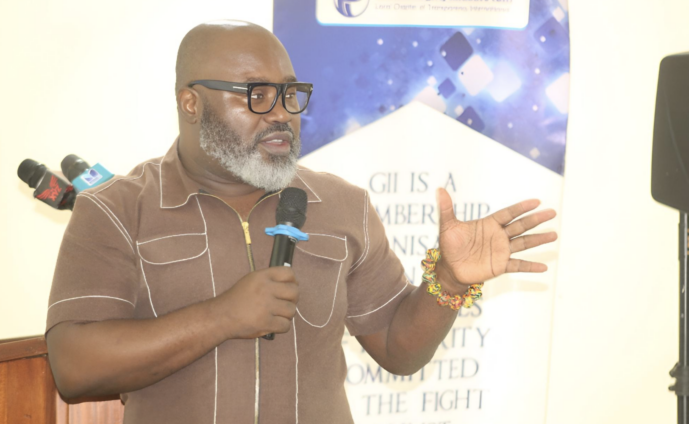
The Executive Director of Africa Education Watch (Eduwatch), Kofi Asare, has called on the government to permanently scrap the use of F9 grades as a barrier to admission into senior high school (SHS).
According to him, every Ghanaian child who completes basic education should have the right to progress to secondary education regardless of their BECE results.
His comments come amid the ongoing 2026 Computerised School Selection and Placement System (CSSPS) exercise, where 55,000 candidates did not qualify for placement primarily because they obtained a Grade 9 in either core English Language or Mathematics.
Mr Asare said while Eduwatch welcomes the government’s decision to allow students who obtain F9 grades to proceed to SHS, the policy should be formally embedded in the Free SHS framework to prevent changes from being made at the discretion of successive governments.
“We have recommended that government should amend or review the Free Senior High School policy document. The policy document must have enshrined in it the requirement to qualify for secondary education. We must waive that F9 thing there.
“There is no qualification to enter secondary education once one completes basic education, so that we don’t be going back and forth year by year, so that it becomes at the discretion of a politician that this year F9 will go, next year F9 will not go.”
Mr Asare maintained that denying students access to SHS because of poor BECE grades would be unfair, particularly because government has a responsibility to provide adequate teaching and learning conditions.
He noted that students who record F9 grades are disproportionately found in deprived areas, including the five northern regions, Oti and Western North.
According to him, challenges such as teacher shortages, inadequate textbooks and lack of basic furniture in some schools can contribute to poor academic outcomes.
“Until government provides adequate facilities across urban, peri-urban and deprived areas, you cannot punish pupils for having F9 in Maths and deny them an opportunity to enter Free Senior High School.”
“Every Ghanaian that completes basic school must enter secondary education regardless of their grades.”
He said Ghana should aspire to a system where no child is denied secondary education because of academic performance at the basic level.
Mr Asare also welcomed the current approach of allowing students who may have obtained F9 grades to proceed to SHS, describing it as a step towards ensuring universal access.
myjoyonline.com

The Minister for Roads and Highways, Governs Kwame Agbodza, says significant progress has been made on major road projects across the country following a nationwide inspection tour.
The Minister said contractors working on projects in the Bono, Upper West, Upper East and Northern Regions have generally performed well, despite delays recorded on some projects.
Speaking to Citi News after concluding his inspection tour, Agbodza said the assessment showed improvements in the pace of work compared to his previous visit.
He, however, acknowledged that some projects have experienced delays and slippages, resulting in adjustments to the scope of work on certain contracts.
“Those we think that it would be too risky to keep with the same volume of work, we have de-scoped. But generally, we have seen great progress from the last time we were here, so we want to encourage everybody to keep working,” he said.
Agbodza urged contractors to sustain the current momentum and ensure that projects are completed within their scheduled timelines.
citinewsroom.com

Some teachers from the 2022 cohort of Colleges of Education graduates have staged a protest over 14 months of unpaid salaries, demanding urgent action from the government.
The teachers say they have been waiting for their salaries since 2025 despite several engagements with relevant stakeholders, including the Ministry of Education, as well as a previous protest over the issue.
According to the group, the prolonged delay has placed significant financial strain on affected teachers, many of whom have accumulated debts while struggling to meet their basic needs.
The teachers are also demanding the issuance of staff identification cards to affected members who are yet to receive them.

As part of the protest, the group intends to petition the Ministry of Finance, the Jubilee House, the Ministry of Education and the Ghana Education Service to intervene and resolve the matter.
Speaking to Citi News, one of the affected teachers said the government’s failure to pay them had left many struggling to meet basic household expenses.
“The government intentionally paid some teachers and left some teachers. For the past 14 months, we have not been paid; we have accumulated debt upon debt. For some of us, paying electricity bills has become a problem; paying water bills has become a problem.
“In fact, we can’t even handle basic things; we can’t even buy boxer shorts for ourselves because we have accumulated so much debt to the extent that whenever we are paid our one-month salaries, our debtors come after us, taking our money,” he said.
The teachers are therefore calling on the government to settle all outstanding salaries and address the administrative challenges affecting their employment, including the delay in issuing staff identification cards.
citinewsroom.com


2026 Ballon d’Or Nominees: Full List Of Contenders Across All Categories

Bogo Blay – Achi Guda | MP3 Download

Government Must Scrap F9 Barrier To SHS Admission – Kofi Asare

Vinicius Vows To Deliver Champions League Glory: “We Are Going To Win It”

Inter Dealt Dimarco Blow Ahead Of Bernabeu Clash

Road Projects Making Significant Progress Across Regions, Agbodza Reports

2022 Cohort Teachers Demand 14 Months’ Unpaid Salaries

Police Arrest Suspect Over Alleged Murder Of Dr Jesse Amuah And Wife

Accra Mayor Directs Traders To Sweep Every Hour

14-Year-Old Boy, Mother And Alleged Gang Leader Arrested Over Accra-Kumasi Highway Robbery

Ablakwa: 4,972 Ghanaians Repatriated From Various Countries Since 2025

Police Bust Armed Robbery Gang Targeting Gold Dealers And Mining Sites

Poor Reading Culture, ‘WhatsApp English’ Caused Decline In 2026 WASSCE – WAEC

Over 10 Students Arrested Over Okuapeman-Mount Sinai SHS Clash

Uber Shuts Operations In Nigeria And Uganda With Immediate Effect

GES Releases National Harmonised Prospectus For 2026/27 SHS Admissions

Today’s Newspaper Headlines: Thursday, 3rd September, 2026

Timeless Messi: Four-Goal Haul, Solo Wonder Goal And 7-1 Rout

BREAKING: Barcelona Reach Agreement With Arsenal For Gabriel Jesus

Former Chief Justice Sophia Akuffo Resigns From The Council Of State

Bogo Blay – Woman (Produced By FimFim)

Iran sanction relief could send Cedis soaring at GH₵8 per dollar – Analyst

Kofi Kinaata Honoured with “Youth in Entertainment” Award at 2025 Millennium Excellence Awards

Efiewura TV series actor Koo Ofori arrested over alleged $50k fraud

‘Not Chosen by Merit’ – Ghanaian Prophet Predicts Short Papacy for Pope Leo XIV

The differences between ‘I love you’ and ‘I’m in love with you’

El Clásico Thriller: Barcelona Edges Real Madrid 4–3 in Seven-Goal Spectacle

Webz – Odo | MP3 Download

Today In History: May 9th Disaster at the Accra Sports Stadium

Ban on Drumming and Noise Making in Accra to Begin May 12 Ahead of Homowo Festival

Alonso To Leave Leverkusen At End Of The Season

VIDEO: Bosomtwe Road Conditions Spark Concerns Over Dust Pollution

VIDEO: Vladimir Putin Welcomes Burkina Faso’s Ibrahim Traoré to Russia for Victory Day Celebrations

EVENT: Feyiase English Assembly Set for an Explosive Praise and Worship Experience!

Newspaper Headlines: Friday, 9th May, 2025

FDA destroys counterfeit pharmaceutical products worth GH₵42m

Two Kidnapped Ghanaian Women Return from Nigeria, CID Confirms

How Ghana lost over GH¢2bn swapping gold for fuel

U.S. Visa: 61,000 applied in Ghana, only 25,000 approved in 2024

Ameyaw-Akumfi granted GH¢10m bail

Sarkodie – Everlasting Ft. Shatta Wale | MP3 Download

Mexico 2-0 South Africa: Hosts Kick Off World Cup In Style With A Win Over Bafana Bafana

700 More Ghanaians To Be Repatriated From South Africa On Saturday And Sunday

VIDEO: Ga East Assembly Demolishes Structures In Waterways To Curb Flooding

WASSCE 2026: KNUST SHS Records One Death, Another Candidate Pregnant – VIDEO

Voxy Driver In Viral Video Jailed For Careless Driving

VIDEO: Headmistress Of Spiritan SHTS Appeals For Urgent Fencing And Infrastructure Support

Barcelona 3-2 Real Madrid: Raphinha Brace Inspires Catalans To Super Cup Victory

VIDEO: Black Stars Will Reach The Final Of 2026 World Cup – Prophet Nigel Gaisie

VIDEO: Ontario Police Bust International Car Theft Ring Including Ghanaian With 306 Stolen Vehicles Recovered

VIDEO: Live Feed Of Funeral Rites For Daddy Lumba

VIDEO: FC Haka Fans Burn Their Own Stadium After Relegation

Africa Cup of Nations 2025: Dates, Fixtures & Everything To Expect In Morocco

Ronaldinho Reigns Supreme: GiveMeSport Names Him the Greatest Dribbler of All Time

VIDEO: Police Arrest Man Seen In Viral Video Forcing Child To Smoke

Barcelona 3-0 Getafe: Catalans Cruise to Convincing Win

Arsenal 1-1 Manchester City: Martinelli Strikes Late to Deny Guardiola’s Men

VIDEO: 2025 World Athletics Championships – Ghana Dominates 4×100 Relays To Qualify For Finals

Liverpool 2-1 Everton: Reds Extend Perfect Start with Merseyside Derby Win

VIDEO: Asantehemaa’s Reign Was Marked By Dignity, Humility And Service – Asantehene
-
 Showbiz1 year ago
Bogo Blay – Woman (Produced By FimFim)
-
 Business1 year ago
Iran sanction relief could send Cedis soaring at GH₵8 per dollar – Analyst
-
 Showbiz1 year ago
Kofi Kinaata Honoured with “Youth in Entertainment” Award at 2025 Millennium Excellence Awards
-
 People & Lifestyle1 year ago
Efiewura TV series actor Koo Ofori arrested over alleged $50k fraud
-
 News1 year ago
‘Not Chosen by Merit’ – Ghanaian Prophet Predicts Short Papacy for Pope Leo XIV
-
 People & Lifestyle1 year ago
The differences between ‘I love you’ and ‘I’m in love with you’
-
 Sports1 year ago
El Clásico Thriller: Barcelona Edges Real Madrid 4–3 in Seven-Goal Spectacle
-
 Showbiz1 year ago
Webz – Odo | MP3 Download