
International
Israeli forces kill 51 Palestinians waiting for flour at Gaza aid site, witnesses and rescuers say

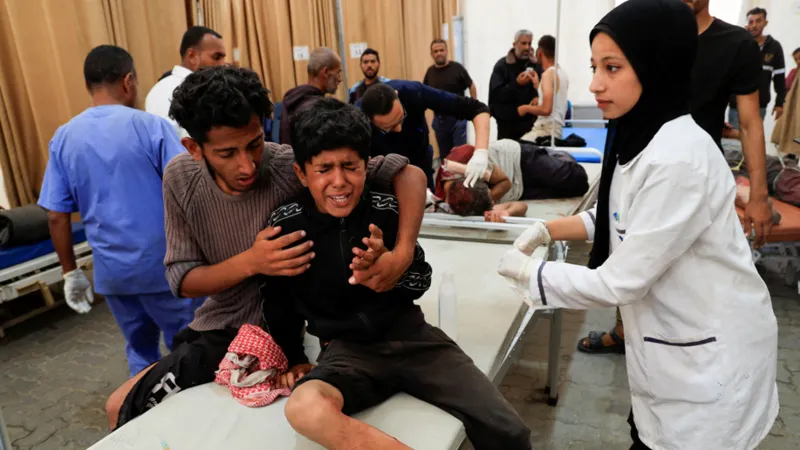
Israeli forces have killed more than 51 Palestinians and wounded many more after opening fire near an aid distribution site in southern Gaza, witnesses and rescuers say.
The Hamas-run civil defence agency said Israeli troops fired on crowds near the aid site in Khan Younis. More than 200 people were reportedly injured.
The Israeli military has told the BBC it is looking into the reports.
It is the latest, and potentially the deadliest, of the almost daily shootings that have been taking place recently near aid distribution sites in Gaza.
READ ALSO: Iran still a strategic threat despite weakened proxies – Analyst warns
Almost all the casualties in Gaza in recent days have been linked to the delivery of aid rather than Israeli strikes on Hamas targets.
Witnesses say that Israeli forces opened fire and shelled an area near a junction to the east of Khan Younis, where thousands of Palestinians had been gathering in the hope of getting flour from a World Food Programme (WFP) site, which also includes a community kitchen nearby.
A local journalist and eyewitnesses said Israeli drones fired two missiles, followed shortly after by a shell from an Israeli tank positioned between 400 and 500m away from the crowd. The explosions caused many casualties.
The crowd had assembled near a key road leading to the town of Bani Suheila, an area that has seen weeks of ongoing Israeli military operations.
READ ALSO: Iran has wanted to erase us since 1979 – Israeli Ambassador to Ghana
Nasser Hospital, the main functioning medical facility in the area, has been overwhelmed by the number of casualties. It is so overcrowded that the many wounded are lying on the floor as medical staff treat their injuries.
Video showing the immediate aftermath of the incident and shared on social media has been located by BBC Verify to a location in Khan Younis. Gaza’s civil defence agency spokesman Mahmud Bassal told AFP that at least 50 people were killed. “Israeli drones fired at the citizens. Some minutes later, Israeli tanks fired several shells at the citizens, which led to a large number of martyrs and wounded,” he said.
READ ALSO: Nuclear threat real, missiles already launched – Israeli envoy justifies attacks on Iran
In a statement the IDF said “a gathering was identified adjacent to an aid distribution truck that got stuck in the area of Khan Younis, and in proximity to IDF troops operating in the area.”
It said it was “aware of reports regarding a number of injured individuals from IDF fire following the crowd’s approach” and the incident was under review.
The World Health Organization (WHO) said it had received reports of a mass casualty incident.
“This is again the result of another food distribution initiative,” said Thanos Gargavanis, WHO trauma surgeon and emergency officer.
“There’s a constant correlation with the positions of the four announced food distribution sites and the mass casualty incidents,” he added, saying the trauma injuries in recent days were mostly from gunshot wounds.
For weeks, medical staff have warned that Nasser Hospital could be overwhelmed and unable to continue to operate under the pressure of multiple casualties, lack of medical supplies and Israeli evacuation orders in the surrounding area.
In recent days, the hospital has been dealing with an almost daily influx of casualties from shooting incidents near the aid distribution sites run by the Gaza Humanitarian Foundation (GHF) – backed by Israel and the US – in southern and central Gaza.
In almost all those incidents, witnesses have said that Israeli troops opened fire, although there have also been reports of local armed gunmen shooting at people.
The response from the IDF has usually been to say that its troops warned people not to approach them – and then fired warning shots when what the IDF calls “suspects” acted in a manner deemed to pose a threat. The Israeli army has provided little or no detail beyond this.
Israel does not allow international news organisations including the BBC into Gaza, making verifying what is happening there difficult.
The GHF has also responded to the shootings by saying that they should not be mentioned in connection to their operations, as the incidents are happening away from their sites.
But there is no doubt that thousands of Palestinians would not be gathered in desperate search for limited supplies of food in those areas if it were not for the way that the new distribution system has been set up.
The IDF has also told Palestinians not to head to aid distribution sites between 18:00 and 06:00 local time. But in order to reach the sites and have a chance of getting food, people have little option.
Verified video from GHF sites show huge crowds of Palestinians rushing to try to get food parcels with no apparent control from the organisation. It has already closed its sites briefly on at least two occasions to try to improve security.
The other way of getting aid into Gaza – with around 100 trucks a day allowed in by Israel – has also also increasingly seen people being shot as they try to get to the supplies, whether from distribution points or from the aid convoy itself as it travels towards them.
It’s a sign of a breakdown both in security in Gaza and in the aid distribution system itself.
Hamas has responded to the latest incident by again describing the aid centres as death traps.
Looting among a population desperate for scarce supplies of food – with criminal gangs, militias and Hamas also operating for their own ends – has rendered the situation even more perilous.
Critics see the GHF as enabling a plan by the Israeli government to displace Palestinians south into smaller areas of Gaza. But Israel – which has long sought to remove the UN as the major humanitarian provider to Palestinians – argues the alternative system was needed to stop Hamas stealing aid.
On Monday, the UN human rights chief Volker Turk said that Israel was weaponising food and called for a full investigation into the shootings.
The head of Unrwa – the UN agency for Palestinian refugees – Philippe Lazzarini has said that in Gaza ‘tragedies go on unabated while attention shifts elsewhere’.
Yet there seems to be no plan from Israel, the Gaza Humanitarian Foundation or the international community to find a way to prevent the near daily killing of Palestinians, as they take their lives in their hands to seek a meagre supply of food.
It has been 20 months since Israel launched a military campaign in Gaza in response to the Hamas-led cross-border attack on Israel on 7 October 2023, in which about 1,200 people were killed and 251 others were taken hostage.
More than 55,297 people have been killed in Gaza since then, according to the territory’s health ministry.
bbc.com




Uber has announced it is closing its operations in Nigeria – Africa’s most populous country – and the East African nation of Uganda with immediate effect.
The global ride-hailing giant said it had come to the “difficult decision” after a thorough review of its business. It began operating in Nigeria in 2014 and in Uganda two years later.
Uber taxi drivers in Nigeria have long complained that app prices are too low given rising fuel costs and that commission charges are too high. The company has also faced pressure from rival platforms.
The announcement came as Uber’s chief executive, Dara Khosrowshahi, said the company was cutting its global workforce by 10%.
Over the last year, Uber has also pulled out of Ivory Coast and Tanzania. The latest announcement means Egypt, Ghana, Kenya and South Africa are the only African countries in which the firm now operates.
“This decision is limited strictly to these two markets and does not impact our operations across the rest of the continent,” Uber’s statement to the BBC said.
“We remain committed to sub-Saharan Africa, where we continue to see strong growth and opportunity.”
Over its 12 years operating in Nigeria, Uber had expanded its services. In the commercial hub of Lagos, a boat service was launched in 2019 to help commuters bypass the city’s notorious congestion.
Lagos, one of Africa’s largest and busiest cities, is infamous for its long traffic jams that cause gridlock and hamper business activity.
Other ride-hailing taxi apps have launched in the West African nation over the last decade, including international competitors such as Bolt and inDrive, as well as several local operators.
But the Nigerian market has become increasingly challenging for them all, with drivers staging protests and industrial action in recent years over rising operating costs, low fares and working conditions.
The removal of Nigeria’s fuel subsidy after President Bola Tinubu’s election in 2023 led to a rise in the cost of living. The subsidy had kept down the price of petroleum products for decades.
This year, motorists have been hit again by rising petrol prices following the US war with Iran.
Uganda’s Daily Monitor newspaper said Uber’s departure would mean a major change for commuters in the capital, Kampala. But it said the void was likely to be filled by other taxi apps such as Faras, Bolt and SafeBoda.
Uber pledged to support employees and drivers affected by the decision and said its help centre would remain open in Nigeria and Uganda until 23 September to address outstanding issues.
myjoyonline.com
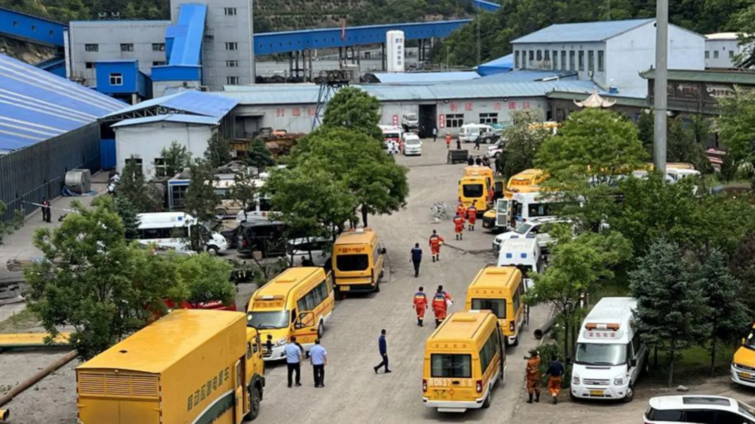
At least 82 people have been killed and two are missing after a coal mine blast in northern China, officials have said.
Rescue officials revised down the death toll in an update late on Saturday, having earlier said at least 90 people had died.
The gas explosion at the Liushenyu Coal Mine in Shanxi province is the worst mining disaster in China since 2009.
There were 247 workers reportedly on duty when the blast happened at 19:29 local time (11:29 GMT) on Friday, with more than 100 people said to be saved and hundreds of rescuers sent to the site.
Chinese President Xi Jinping said no effort must be spared in efforts to treat the injured and search for survivors.
The country’s state council later said a “rigorous” investigation would be conducted and those found responsible would be “severely punished”.
Officials apologised for the confusion over the death toll, saying the situation was chaotic at the beginning which led to an unclear headcount and an incorrect figure.
They said that 128 people were being treated in hospitals, including two in critical condition.
Most were affected after inhaling poisonous gas, according to state media, though it is not clear what type of gas it was.
Early on Sunday morning, rescuers deployed mine inspection robots underground, equipped with gas sensors and infrared cameras, state media reported.
The robots were operated by rescue workers who used them to enter unreachable areas to collect data and detect signs of life.
Local officials have also ordered immediate safety inspections of coal mines across Shanxi province. Production has been suspended at all four mines run by the group in charge of the Liushenyu Coal Mine, state media reported.
Wang Yong, an injured miner, told state media that when the incident happened, he did not hear a sound but saw a sudden plume of smoke.
“I smelled sulphur, the same smell you get from blasting. I shouted at people to run. As we were running I could see people collapsing from the fumes. Then I blacked out too,” he said.
“I lay there for about an hour or so before I came round on my own. I woke up the person next to me and we got out together.”

Some of the management team at the mine have reportedly been detained. The cause of the gas explosion has not yet been revealed, but state media reported that the levels of carbon monoxide – a highly toxic, odourless gas – in the mine were found to have “exceeded limits”.
China’s Ministry of Emergency Management has sent 345 personnel from six rescue teams to help with the operation.
State media said the rescue operation had encountered difficulties as water has built up near the explosion site, preventing access to certain areas, while blueprints provided by the mine did not match the actual conditions.

In 2024, the Liushenyu mine was listed as one of the “severe safety hazards” by the Chinese National Mine Safety Administration.
Tongzhou Group, which runs the mine, has reportedly received two administrative penalties in 2025 for safety issues.
Shanxi province produces more than a quarter of China’s total coal output.
This disaster is a reminder of the darkest days of China’s coal mining industry.
In the early 2000s, deadly accidents were common in coal mines across the country. Safety standards have been tightened in recent years, and there has also been a crackdown on illegal coal mines, especially in Shanxi.
But accidents still happen.
In 2023, a collapse at an open-pit coal mine in the northern Inner Mongolia region killed 53 people.
And in 2009, an explosion at a mine in Heilongjiang province in the north-east killed more than 100.
China is the world’s biggest consumer of coal and the largest emitter of greenhouse gases, even as it installs renewable energy capacity at record speed.
The incident comes just days after high-profile visits by US President Donald Trump and Russian leader Vladimir Putin to the country.
bbc.com
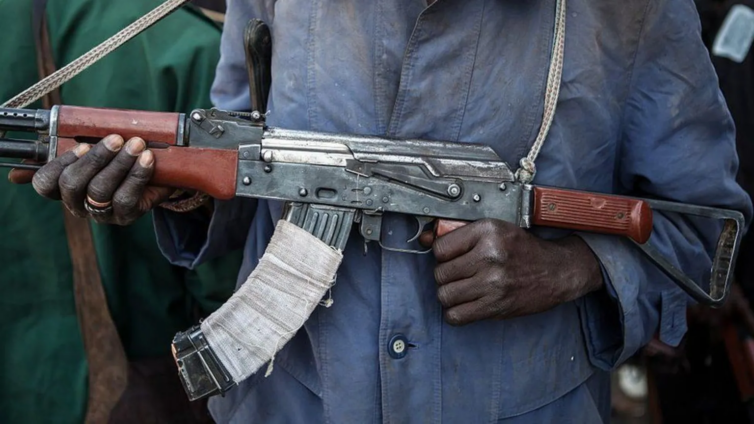
Gunmen have kidnapped more than 50 children from three schools in the same town in north-eastern Nigeria, teachers and parents have told the BBC.
Most of those missing are aged between two and five years old.
Eyewitnesses who saw the attacks on Friday morning in Mussa, Borno state, say the suspects used the children as human shields while fleeing on motorbikes, preventing security forces from opening fire.
No group has claimed responsibility for the attacks. Government officials have not responded to the BBC’s requests for comment, but a press statement issued on Saturday by Senator Ali Ndume of Borno South said at least 42 children had been abducted from two schools.
The kidnappings took place at the town’s Government Day Secondary School, Mussa Central Primary School, and State Universal Basis Education Board (SUBEB) Secondary School.
Some reports suggest the attacks bore the hallmark of Boko Haram – the Islamist group vying for control over the region against its rival faction, Islamic State West Africa Province (Iswap).
Nigeria is currently grappling with a spate of mass abductions by a range of culprits.
Locals in Borno state have endured decades of insecurity. These latest attacks have prompted some resident of Mussa to flee the area.
Yet traumatised parents have told the BBC they feel they have no choice but to wait in anguish for news about their children.
One man, who did not want to be named for fear of reprisal, said his wife was inconsolable after their six-year-old daughter was snatched away by the gunmen.
Abdu Dunama, headmaster of Mussa Central Primary School, described hearing gunfire before armed men stormed the school and rounded up children.
He said 34 children – mostly nursery pupils aged five and under – were seized by the attackers from their classrooms.
The suspected militants arrived at the schools on motorcycles soon after troops on patrol left the town, according to residents.
“[It was] immediately after they left, it was not up to 30 minutes after,” said Bukar Buba, whose daughter was taken.
Witnesses said the gunmen fired sporadically, forcing residents to run for cover. Many parents watched helplessly from a nearby hill as their children were loaded onto motorcycles and taken away.
Some older students managed to flee into nearby bushes during the chaos, according to residents.
The largely farming community – already struggling economically – is now appealing urgently to the government to help secure the safe return of the children.
Dunama, who is in touch with security forces, says troops are currently on the ground and continuing efforts to track the abductors.
myjoyonline.com


2026 Ballon d’Or Nominees: Full List Of Contenders Across All Categories

Bogo Blay – Achi Guda | MP3 Download

Government Must Scrap F9 Barrier To SHS Admission – Kofi Asare

Vinicius Vows To Deliver Champions League Glory: “We Are Going To Win It”

Inter Dealt Dimarco Blow Ahead Of Bernabeu Clash

Road Projects Making Significant Progress Across Regions, Agbodza Reports

2022 Cohort Teachers Demand 14 Months’ Unpaid Salaries

Police Arrest Suspect Over Alleged Murder Of Dr Jesse Amuah And Wife

Accra Mayor Directs Traders To Sweep Every Hour

14-Year-Old Boy, Mother And Alleged Gang Leader Arrested Over Accra-Kumasi Highway Robbery

Ablakwa: 4,972 Ghanaians Repatriated From Various Countries Since 2025

Police Bust Armed Robbery Gang Targeting Gold Dealers And Mining Sites

Poor Reading Culture, ‘WhatsApp English’ Caused Decline In 2026 WASSCE – WAEC

Over 10 Students Arrested Over Okuapeman-Mount Sinai SHS Clash

Uber Shuts Operations In Nigeria And Uganda With Immediate Effect

GES Releases National Harmonised Prospectus For 2026/27 SHS Admissions

Today’s Newspaper Headlines: Thursday, 3rd September, 2026

Timeless Messi: Four-Goal Haul, Solo Wonder Goal And 7-1 Rout

BREAKING: Barcelona Reach Agreement With Arsenal For Gabriel Jesus

Former Chief Justice Sophia Akuffo Resigns From The Council Of State

FDA destroys counterfeit pharmaceutical products worth GH₵42m

Iran sanction relief could send Cedis soaring at GH₵8 per dollar – Analyst

Bogo Blay – Woman (Produced By FimFim)

Kofi Kinaata Honoured with “Youth in Entertainment” Award at 2025 Millennium Excellence Awards

Efiewura TV series actor Koo Ofori arrested over alleged $50k fraud

‘Not Chosen by Merit’ – Ghanaian Prophet Predicts Short Papacy for Pope Leo XIV

El Clásico Thriller: Barcelona Edges Real Madrid 4–3 in Seven-Goal Spectacle

The differences between ‘I love you’ and ‘I’m in love with you’

Webz – Odo | MP3 Download

Today In History: May 9th Disaster at the Accra Sports Stadium

Ban on Drumming and Noise Making in Accra to Begin May 12 Ahead of Homowo Festival

VIDEO: Bosomtwe Road Conditions Spark Concerns Over Dust Pollution

Alonso To Leave Leverkusen At End Of The Season

EVENT: Feyiase English Assembly Set for an Explosive Praise and Worship Experience!

VIDEO: Vladimir Putin Welcomes Burkina Faso’s Ibrahim Traoré to Russia for Victory Day Celebrations

Tamale Drug Dealer Fined Gh₵1.68M, Faces 25 Years In Jail Over Tramadol Bust

Newspaper Headlines: Friday, 9th May, 2025

Two Kidnapped Ghanaian Women Return from Nigeria, CID Confirms

How Ghana lost over GH¢2bn swapping gold for fuel

Ameyaw-Akumfi granted GH¢10m bail

Sarkodie – Everlasting Ft. Shatta Wale | MP3 Download

Mexico 2-0 South Africa: Hosts Kick Off World Cup In Style With A Win Over Bafana Bafana

700 More Ghanaians To Be Repatriated From South Africa On Saturday And Sunday

VIDEO: Ga East Assembly Demolishes Structures In Waterways To Curb Flooding

WASSCE 2026: KNUST SHS Records One Death, Another Candidate Pregnant – VIDEO

Voxy Driver In Viral Video Jailed For Careless Driving

VIDEO: Headmistress Of Spiritan SHTS Appeals For Urgent Fencing And Infrastructure Support

Barcelona 3-2 Real Madrid: Raphinha Brace Inspires Catalans To Super Cup Victory

VIDEO: Black Stars Will Reach The Final Of 2026 World Cup – Prophet Nigel Gaisie

VIDEO: Ontario Police Bust International Car Theft Ring Including Ghanaian With 306 Stolen Vehicles Recovered

VIDEO: Live Feed Of Funeral Rites For Daddy Lumba

VIDEO: FC Haka Fans Burn Their Own Stadium After Relegation

Africa Cup of Nations 2025: Dates, Fixtures & Everything To Expect In Morocco

Ronaldinho Reigns Supreme: GiveMeSport Names Him the Greatest Dribbler of All Time

VIDEO: Police Arrest Man Seen In Viral Video Forcing Child To Smoke

Barcelona 3-0 Getafe: Catalans Cruise to Convincing Win

Arsenal 1-1 Manchester City: Martinelli Strikes Late to Deny Guardiola’s Men

VIDEO: 2025 World Athletics Championships – Ghana Dominates 4×100 Relays To Qualify For Finals

Liverpool 2-1 Everton: Reds Extend Perfect Start with Merseyside Derby Win

VIDEO: Asantehemaa’s Reign Was Marked By Dignity, Humility And Service – Asantehene
-
 News1 year ago
FDA destroys counterfeit pharmaceutical products worth GH₵42m
-
 Business1 year ago
Iran sanction relief could send Cedis soaring at GH₵8 per dollar – Analyst
-
 Showbiz1 year ago
Bogo Blay – Woman (Produced By FimFim)
-
 Showbiz1 year ago
Kofi Kinaata Honoured with “Youth in Entertainment” Award at 2025 Millennium Excellence Awards
-
 People & Lifestyle1 year ago
Efiewura TV series actor Koo Ofori arrested over alleged $50k fraud
-
 News1 year ago
‘Not Chosen by Merit’ – Ghanaian Prophet Predicts Short Papacy for Pope Leo XIV
-
 Sports1 year ago
El Clásico Thriller: Barcelona Edges Real Madrid 4–3 in Seven-Goal Spectacle
-
 People & Lifestyle1 year ago
The differences between ‘I love you’ and ‘I’m in love with you’